Living in Elizabeth
Living in Elizabeth, Charlotte
One page covering the whole neighborhood — where it is, how it was built, what it costs, what governs changing a house here, and what an ordinary week looks like.
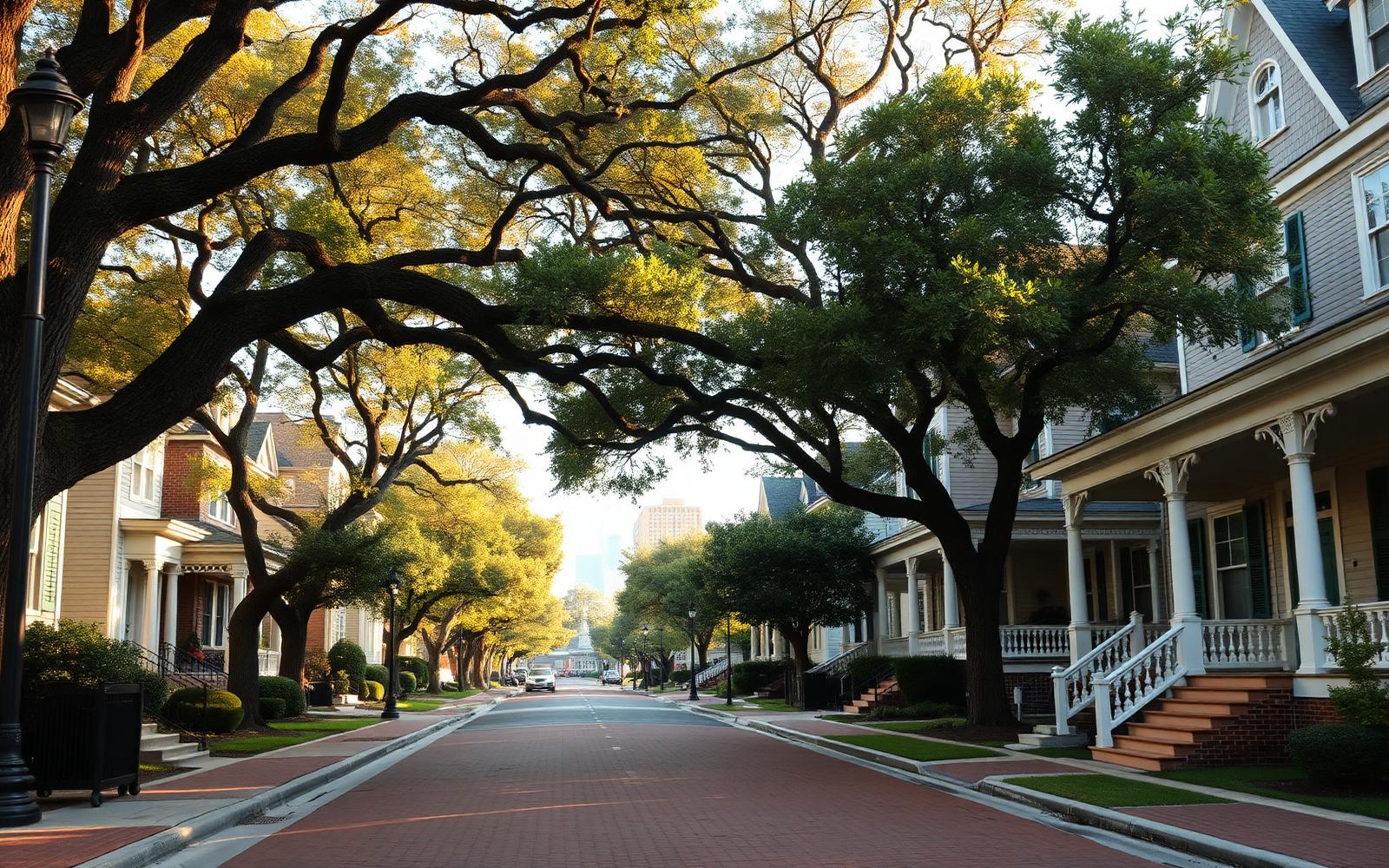
Elizabeth is the neighborhood immediately east of uptown Charlotte: roughly a mile-and-a-quarter of pre-Depression housing stock, arranged on a walkable grid under a willow oak canopy, with a genuine public park at its center and two hospital campuses at its western edge. It sits inside ZIP code 28204, bounded loosely by Independence Boulevard, Hawthorne Lane, Central Avenue, and the medical district along East Third and Fourth Streets.
This page is the overview. Everything summarized here has a dedicated page with more depth, linked in place — but read straight through, this is the orientation a resident would give a newcomer.
On this page
- Where Elizabeth is
- How it was built
- The architecture
- The historic district
- The housing market
- Daily life, dining and parks
- Schools and getting around
- Renovating and building here
Where Elizabeth is
The neighborhood's defining geographic fact is proximity: uptown is a walk, not a commute. Elizabeth Avenue and East Seventh Street run east from the city center and form the commercial spine; Independence Park occupies the middle; the residential grid fills in between Hawthorne Lane and the hospital campuses. Because the street pattern predates the automobile, blocks are short, sidewalks are continuous, and almost every house sits within a few minutes of somewhere to eat.
Parks & Greenways
Independence Park
Center from Elizabeth
Charlotte's first public park (1904) — pond, rose garden, ball fields, and the neighborhood's green heart.
Browse 20 places
How it was built
Elizabeth was platted in 1891 around a women's college and grew along a streetcar line running east from the square, making it Charlotte's second streetcar suburb. Build-out came in waves: the earliest large houses near the college and the park, a broad Craftsman and Colonial Revival expansion through the 1910s and 1920s, a thinner Depression-and-postwar layer, and finally the modern infill of condominiums and townhomes along the Elizabeth Avenue and Seventh Street corridors. The result is a neighborhood whose age is legible from the sidewalk.
The architecture
The dominant types are the Craftsman bungalow — deep porch, tapered columns, exposed rafter tails — and the Colonial and Dutch Colonial Revival house, with American Foursquares and a smaller set of Tudor Revival cottages filling in. Condominiums, lofts, and infill townhomes serve buyers who want the location without a hundred-year-old roof. What holds it together is not a single style but consistent scale: similar setbacks, similar heights, porches facing the street.
Read the buildings in detail
The historic district
A large portion of Elizabeth is a locally designated historic district — a different and more consequential thing than National Register listing. Local designation means exterior alterations visible from the street generally require a Certificate of Appropriateness from the Charlotte Historic District Commission before the county issues a building permit. Windows, siding, roof form, porches, additions, and demolition are all in scope; interiors are not. For a buyer, that is the single most important thing to understand before making plans for a house here.
The housing market
This is a small market: a few thousand households, mostly owner-occupied, held a long time. Listings appear episodically rather than continuously, and the spread between an original house and a thoroughly renovated one on the same block can be wide. Condos along Elizabeth Avenue absorb buyers who want the location with less maintenance, while the hospital campuses sustain a steady professional rental base. This guide publishes no individual listings; the market pages explain the bands and the drivers instead.
Homes & market
Real estate in Elizabeth
Housing stock, price bands, condo buildings, streets, and how this small historic market trades.
Daily life, dining and parks
Independence Park anchors the neighborhood's green space, with courts, open lawn, and the greenway connections beyond it. The restaurant and coffee scene concentrates along Seventh Street and Elizabeth Avenue and is genuinely walkable from most of the grid — one of the few places in Charlotte where dinner does not require a car. Weekly life is correspondingly pedestrian: short errands on foot, uptown events a walk away, and a seasonal calendar of neighborhood traditions.
Schools and getting around
Elizabeth falls inside Charlotte-Mecklenburg Schools assignment zones, assigned by address rather than by neighborhood, with magnet options layered on top. Zones change, so any specific address should be verified against the district's own lookup. For transportation, the CityLYNX Gold Line streetcar runs through the neighborhood toward uptown, bus service is dense along the corridors, and most residents still own a car for trips outside the center city.
Living here
Dining, parks, schools & daily life
Restaurants, green space, school assignment, transit, and walkability, page by page.
Renovating and building here
Almost every project in Elizabeth is a renovation, an addition, or an infill build on a constrained lot — and almost all of them run through design review before they reach a building permit. The practical sequence is the same regardless of scope: confirm the parcel's designation, assess structure and systems, design with review in mind, secure the Certificate of Appropriateness, then permit and build. Rear additions that step down in height succeed; street-facing changes that remove period material generally do not.
The trades, and how they work locally
Heritage
History, architecture & the historic district
Where the neighborhood came from and what designation means before you touch a façade.
Building & design
Renovating a historic house
Additions, whole-house renovation, interiors, and technology inside plaster-and-lath walls.
Local expertise
A neighborhood this small and this regulated rewards specialists
Peters & Associates works Elizabeth and Charlotte's historic districts specifically, where inventory is episodic and design review shapes what a house can become.
Charlotte Real Estate
Peters & Associatesyourleaderinluxury.comAdvertising disclosure. This is a paid or affiliated relationship: the firm above is affiliated with or compensates the publisher of this guide, and contacting it may result in a commercial engagement. It does not buy editorial placement. Full disclosure.
Questions & Answers
Frequently asked questions
Direct answers to what readers most often ask about this section of the guide. Each answer cites the primary source it rests on.
All Elizabeth questions →What is Elizabeth known for?
Charlotte's second streetcar suburb: an intact willow oak canopy, a locally designated historic district of Craftsman bungalows and Colonial Revival houses, Independence Park at its center, a walkable restaurant corridor on Seventh Street and Elizabeth Avenue, and two major hospital campuses at its western edge.
Is Elizabeth a good neighborhood to live in?
It suits people who want a walkable, architecturally coherent in-town neighborhood a mile from uptown and are comfortable owning a pre-Depression house inside a design-review district. It suits people who want large lots, new construction, or a car-oriented layout considerably less.
Source: City of Charlotte
What do homes cost in Elizabeth?
Prices vary widely by street, condition, and whether a house has been renovated, and this guide does not publish live figures or individual listings. The market pages explain the price bands and the factors that move value block to block; current pricing should come from a licensed agent working the neighborhood.
What schools serve Elizabeth?
Elizabeth falls inside Charlotte-Mecklenburg Schools assignment zones, and assignment is by address rather than by neighborhood. Zones and magnet options change, so verify a specific address with the district's own assignment lookup before relying on it.
Can you walk to things in Elizabeth?
Yes. Most of the neighborhood is within a ten-minute walk of a coffee shop or restaurant, Independence Park, and a CityLYNX Gold Line streetcar stop, with uptown reachable on foot or in a five-minute drive.
Source: City of Charlotte tree canopy and tree ordinance program
Our Sources
How this page was researched
This guide is independently written and verified against primary public records and official organizations. It is not affiliated with, endorsed by, or representing any neighborhood association, hospital, college, school district, or governing body.
Read our full citation methodology and editorial standards- 01Survey and designation records for Charlotte's historic neighborhoods
Charlotte-Mecklenburg Historic Landmarks Commission
Historic designation, survey history, and landmark property records.
- 02National Register of Historic Places listings in North Carolina
NC State Historic Preservation Office
National Register district listings and nomination documents.
- 03Local historic district design standards and review process
City of Charlotte Historic District Commission
Certificate of Appropriateness requirements for exterior work.
- 04American Community Survey — Charlotte, NC
U.S. Census Bureau
Population, household, and housing characteristics.
- 05School assignment and boundary lookup
Charlotte-Mecklenburg Schools
Assignment zones and school information for the neighborhood.
Figures such as pricing, assessments, business hours, and school assignment change over time. Always confirm current details directly with the source before making a decision.
Topic Cluster
Elizabeth Answers & Orientation
Where to start, what to read next, and how this guide is researched.
The Elizabeth Guide — Elizabeth Answers & Orientation →The Elizabeth Guide
The full authority hub linking every section of this guide.
Continue →Elizabeth Homes & Real Estate
Housing stock, price bands, and how this small historic market actually trades.
Continue →The Elizabeth Historic District
Designation, boundaries, and what review means before you touch a façade.
Continue →Living in Elizabeth
The daily rhythm — porches, dog walks, the park loop, and dinner four blocks away.
Continue →Local Expertise
Work with the firms behind this guide
For advice about a specific property or project, contact the firms directly on their own websites.