The Neighborhood's Green Heart
Independence Park
Charlotte's first public park — history, design, features, and why the blocks around it trade differently.
Independence Park predates most of the houses around it. Widely credited as Charlotte's first public park, it opened in the early years of the twentieth century, around the same time the streetcar line that created Elizabeth was extending east from uptown. The park and the neighborhood grew up together, and more than a century later it remains the clearest organizing feature of Elizabeth's geography — nearly every description of "where things are" in the neighborhood starts from the park.
Early design context
Like many American parks built in this era, Independence Park's informal, curvilinear paths and pastoral open lawns reflect the naturalistic landscape design principles that the Olmsted firm had popularized nationally in the decades before. That broader design language — winding paths rather than rigid grids, open meadow-like lawns, and framed views rather than formal axes — shaped how American city parks of this period were laid out generally. Readers interested in the specific attribution and design history of Independence Park itself should consult Mecklenburg County Park and Recreation's own historical records rather than assume a direct Olmsted firm commission.
What's in the park today
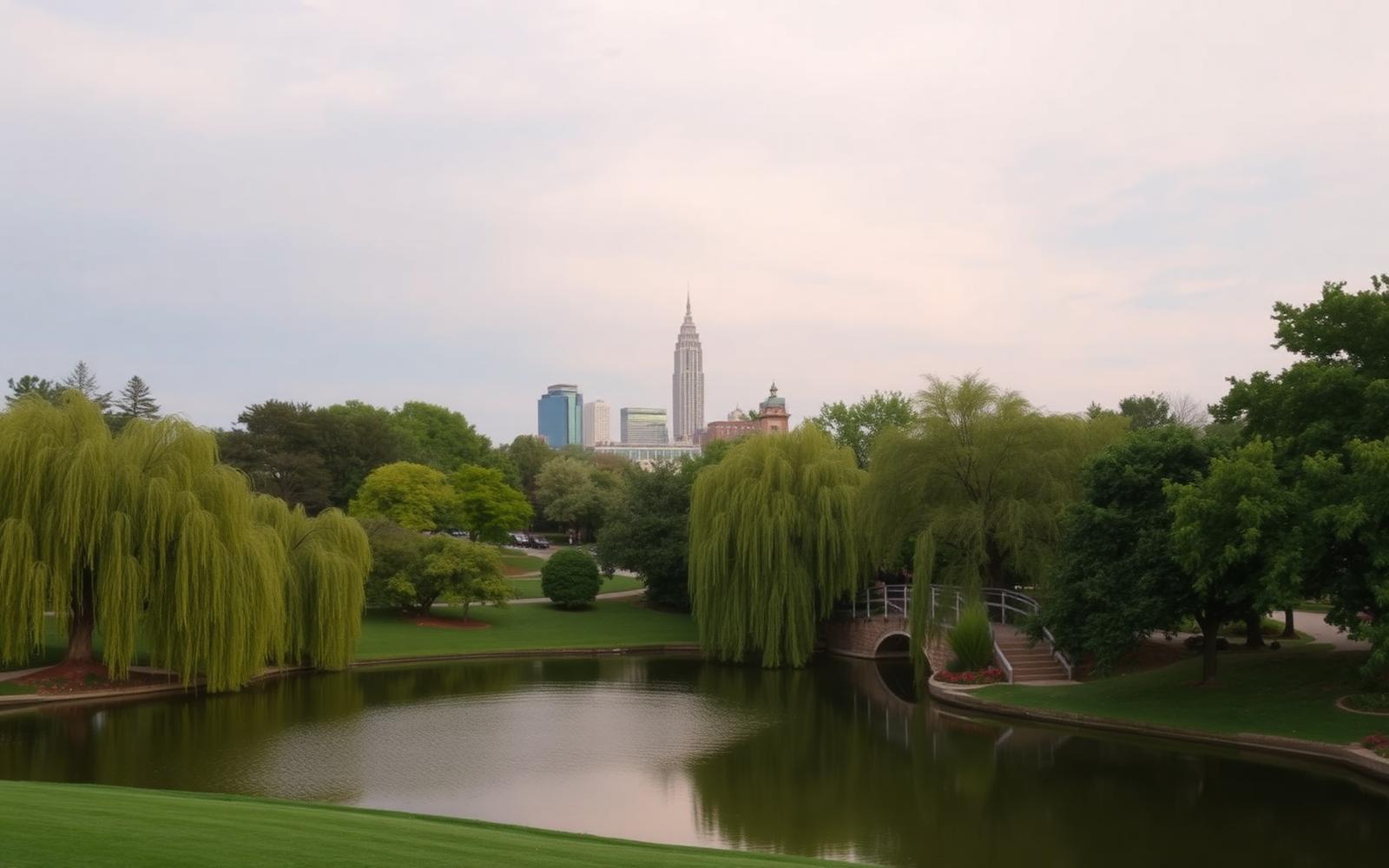
The park holds paved walking and jogging paths, open lawn areas used for informal recreation, mature shade trees that are part of the neighborhood's larger canopy, ball fields, and a pond that has long been one of its signature features. Programming, hours, and specific facilities can change, so anyone planning a visit around a particular amenity should confirm current details with Mecklenburg County Park and Recreation.
The surrounding blocks
The streets framing Independence Park hold some of Elizabeth's largest and most prominent historic houses. Builders and early buyers clearly valued park frontage from the start: the Colonial Revival two-stories and American Foursquares here tend to be larger and more architecturally elaborate than the smaller bungalows found on some of the neighborhood's interior streets further from the park. That pattern has held for a century.
Why park frontage matters to real estate
Proximity to Independence Park is one of the most consistently cited value factors in Elizabeth, alongside street traffic, lot width, and canopy. A short, genuine walk to the park — not merely a nearby address — tends to support a real premium, and the park-facing blocks see some of the thinnest turnover in the neighborhood, since owners there tend to stay for decades. Buyers who prioritize park access should walk the specific route from a prospective house to the park itself, since a few blocks can be the difference between a two-minute walk and a ten-minute one.
Living in Elizabeth
Continue through the Living guide
Park-frontage property
Houses framing Independence Park are some of Elizabeth's most sought-after
Inventory on these blocks is thin and rarely lasts. Peters & Associates tracks activity here closely and can alert you before a park-facing house is widely marketed.
Charlotte Real Estate
Peters & Associatesyourleaderinluxury.comAdvertising disclosure. This is a paid or affiliated relationship: the firm above is affiliated with or compensates the publisher of this independent guide, and contacting it may result in a commercial engagement. It does not buy editorial placement. Full disclosure.
Questions & Answers
Frequently asked questions
Direct answers to what readers most often ask about this section of the guide. Each answer cites the primary source it rests on.
All Elizabeth questions →Is Independence Park really Charlotte's first public park?
Yes — it is widely credited as Charlotte's first public park, opening in the early twentieth century as the city's parks system was first taking shape. Its early establishment is a large part of why it sits at the physical and symbolic center of the Elizabeth neighborhood.
Was Independence Park designed by the Olmsted firm?
Early-twentieth-century American park design was heavily influenced by the naturalistic, curvilinear landscape principles the Olmsted firm popularized nationally, and Independence Park's informal paths and pastoral layout reflect that broader design tradition. Whether the Olmsted firm was directly involved in its design should be verified against the park's own historical documentation and Mecklenburg County's park records rather than assumed.
What features does Independence Park have?
The park includes paved walking paths, open lawns, mature trees, ball fields, and a pond. Facilities and programming can change over time, so residents and visitors planning around a specific amenity should check current details with Mecklenburg County Park and Recreation.
Source: City of Charlotte tree canopy and tree ordinance program
Why does living near Independence Park matter for real estate value?
Park frontage and short walking distance to Independence Park are among the most consistently cited value factors for houses in Elizabeth, alongside canopy and lot width. Houses on the blocks directly framing the park, particularly the larger Colonial Revival and Foursquare homes there, tend to command a premium over comparable houses further from the park.
Source: City of Charlotte tree canopy and tree ordinance program
What is around Independence Park?
The blocks framing the park hold some of the neighborhood's largest and most prominent historic houses, a mix of Colonial Revival two-stories and American Foursquares, reflecting the premium that early builders and buyers already placed on park-facing lots.
Our Sources
How this page was researched
This guide is independently written and verified against primary public records and official organizations. It is not affiliated with, endorsed by, or representing any neighborhood association, hospital, college, school district, or governing body.
Read our full citation methodology and editorial standards- 01Parks, greenways, and recreation directory
Mecklenburg County Park and Recreation
Independence Park, greenway access, and nearby recreation.
- 02Local history collections and archives
Charlotte Mecklenburg Library — Robinson-Spangler Carolina Room
Historical record of the neighborhood's founding and growth.
- 03Survey and designation records for Charlotte's historic neighborhoods
Charlotte-Mecklenburg Historic Landmarks Commission
Historic designation, survey history, and landmark property records.
Figures such as pricing, assessments, business hours, and school assignment change over time. Always confirm current details directly with the source before making a decision.
Topic Cluster
Living in Elizabeth
Dining, parks, schools, transit, and the daily rhythm of the neighborhood.
The Elizabeth Guide — Living in Elizabeth →Parks & Greenways
Independence Park, Little Sugar Creek, Alexander Street, and the pocket greens.
Continue →History of Elizabeth
1891 to today — the college, the streetcar, the park, and four building waves.
Continue →Living in Elizabeth
The daily rhythm — porches, dog walks, the park loop, and dinner four blocks away.
Continue →Events & Neighborhood Traditions
The annual calendar: porch crawls, park concerts, and holiday traditions.
Continue →Local Expertise
Work with the firms behind this guide
Last reviewed August 1, 2026. This guide keeps no contact form and no inbox — inquiries go directly to the firms below.