Living in Elizabeth
Living in Elizabeth
Porches, dog walks, dinner four blocks away — the daily texture of Charlotte's second-oldest neighborhood.
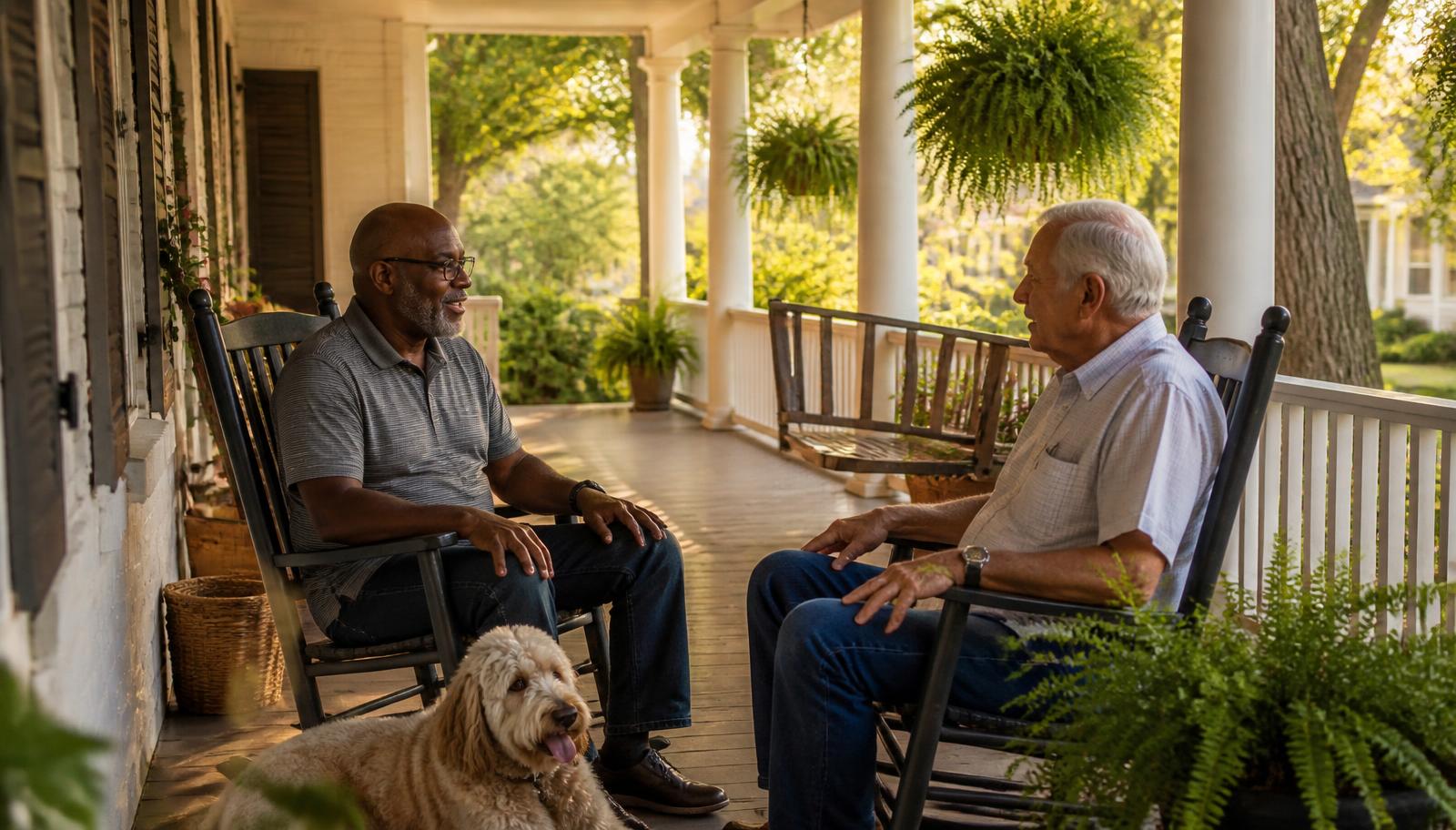
Elizabeth is small enough that its residents tend to describe their lives in terms of a loop rather than a commute: the walk to coffee, the lap around Independence Park, the short drive or streetcar hop to uptown, the walk home past porches where neighbors are sitting out. It is one of the few Charlotte neighborhoods old enough, dense enough, and connected enough by sidewalk that a car genuinely becomes optional for much of the day.
Who actually lives here
The population is a genuine mix rather than a single demographic. Long-time owners who bought modest bungalows decades ago and restored them slowly still anchor many blocks. Younger families are drawn by the park, the walkability, and the school options, and they tend to gravitate toward the larger Foursquares and Colonial Revivals with room to grow into. A steady population of medical residents, nurses, and hospital staff rents near the Novant Health Presbyterian campus, and Central Piedmont Community College adds students and faculty to the mix along Elizabeth Avenue. That blend is part of why the neighborhood feels lived-in at every hour rather than emptying out after the evening commute.
Porch culture and the pace of the street
The deep, columned front porches that define the neighborhood's Craftsman bungalows are not just architectural ornament — they are used. Evenings and weekend mornings bring people outside, and the shallow setbacks on most interior streets put porches close enough to the sidewalk that conversation with a passing neighbor is normal, not intrusive. That proximity is a large part of what people mean when they say Elizabeth feels like a small town. It also means privacy on a front porch is limited, which is worth knowing before you commit to sitting out there every night.
Dog walking and the park loop
Independence Park sits at the center of the neighborhood's daily geography, and its paved paths, ball fields, and pond draw a steady stream of dog walkers, joggers, and parents with strollers throughout the day. Interior streets with sidewalks on both sides make block-by-block dog walking easy without needing to cross a major road. There is no dedicated off-leash dog park inside Elizabeth itself, so regular dog owners typically drive a short distance to one of Charlotte's larger off-leash areas.
Canopy, seasons, and what changes through the year
Elizabeth's mature willow oak and hardwood canopy is the single biggest driver of how the neighborhood feels through the seasons. Summer brings deep shade on interior streets and a noticeably cooler walk than treeless newer suburbs; fall brings a long, colorful leaf drop that keeps homeowners raking for weeks; winter opens up sightlines and porches that were hidden all summer; and spring brings a burst of dogwood and azalea color in the older gardens. The canopy is protected in part by the city's tree ordinance, but storm damage and utility work still take mature trees down periodically, and residents notice each loss.
Noise, traffic, and the honest trade-offs
Living this close to uptown and to a full-service hospital campus comes with real trade-offs. The boundary roads — Hawthorne Lane, Elizabeth Avenue, Central Avenue, and Providence Road — carry meaningful daily traffic and occasional sirens. Interior streets are quieter but not silent; a block two streets off a boundary road behaves very differently from a block directly on one. Parking is unmetered on most residential streets but can be tight near Seventh Street's restaurant cluster on weekend nights. None of this is unusual for an in-town historic neighborhood, but it is worth experiencing in person, at different times of day, before deciding a given block is right for you.
The trade-off at the center of it all
Choosing Elizabeth means choosing character and walkability over the predictability of new construction. Systems are older, layouts are quirkier, and exterior changes inside the historic district go through design review. In exchange, residents get a coherent, tree-shaded streetscape, a five-minute walk to a real park, and a sense of neighborhood identity that is difficult to manufacture in a subdivision built last year. Most people who choose Elizabeth make that trade deliberately, and most say they would make it again.
Living in Elizabeth
Continue through the Living guide
Thinking about the move
Deciding whether Elizabeth's daily rhythm fits your life is half the decision
Peters & Associates can walk specific blocks with you at different times of day, so you understand the noise, the canopy, and the commute before you write an offer.
Charlotte Real Estate
Peters & Associatesyourleaderinluxury.comAdvertising disclosure. This is a paid or affiliated relationship: the firm above is affiliated with or compensates the publisher of this independent guide, and contacting it may result in a commercial engagement. It does not buy editorial placement. Full disclosure.
Questions & Answers
Frequently asked questions
Direct answers to what readers most often ask about this section of the guide. Each answer cites the primary source it rests on.
All Elizabeth questions →What is daily life like in Elizabeth, Charlotte?
Most days revolve around walking rather than driving: a coffee run down Seventh Street, a loop around Independence Park with the dog, an evening on the porch as neighbors pass by. Residents describe the pace as small-town within a large city, because the neighborhood's tight grid and short blocks put daily errands within a few minutes on foot.
Source: City of Charlotte tree canopy and tree ordinance program
Who lives in Elizabeth?
The neighborhood mixes long-time owners who bought and restored houses decades ago, younger families drawn by the schools and the park, medical and college staff working at the adjacent Novant Health and Central Piedmont campuses, and renters in the corridor's condos and apartments. It reads as more settled and less transient than nearby Plaza Midwood, though both draw similar in-town buyers.
Is Elizabeth noisy or does it feel quiet?
It depends entirely on the block. Interior streets under full canopy are genuinely quiet. The boundary corridors — Hawthorne Lane, Elizabeth Avenue, Central Avenue, and Providence Road — carry real traffic volume and some sirens given the hospital's proximity, and buyers sensitive to street noise should walk a target block at different times of day before committing.
Source: City of Charlotte tree canopy and tree ordinance program
Is Elizabeth good for dog owners?
Yes. Independence Park, the sidewalk network, and the short block lengths make it an easy neighborhood for daily dog walking, and it's common to see the same dogs and owners on a regular loop. There is no off-leash dog park inside the neighborhood itself, so owners typically drive to one nearby.
What are the trade-offs of living in a historic in-town neighborhood?
The trade-offs are the flip side of the appeal: older systems that need ongoing maintenance, design review for visible exterior changes, limited off-street parking on some blocks, smaller closets and bathrooms than new construction, and a housing stock where no two houses are quite alike. In exchange, residents get walkability, mature trees, architectural character, and a genuine sense of place that newer subdivisions rarely offer.
Source: City of Charlotte tree canopy and tree ordinance program
How does the tree canopy affect life in the neighborhood?
The willow oak and mature hardwood canopy over many interior streets keeps the neighborhood noticeably cooler in summer and defines its visual identity, but it also means storm damage, root intrusion into old sewer laterals, and periodic canopy loss are real, recurring maintenance realities for homeowners and the city alike.
Source: City of Charlotte tree canopy and tree ordinance program
Our Sources
How this page was researched
This guide is independently written and verified against primary public records and official organizations. It is not affiliated with, endorsed by, or representing any neighborhood association, hospital, college, school district, or governing body.
Read our full citation methodology and editorial standards- 01American Community Survey — Charlotte, NC
U.S. Census Bureau
Population, household, and housing characteristics.
- 02Parks, greenways, and recreation directory
Mecklenburg County Park and Recreation
Independence Park, greenway access, and nearby recreation.
- 03Charlotte visitor and neighborhood guides
Charlotte Regional Visitors Authority
Dining, culture, and things to do in and near the neighborhood.
- 04Tree canopy program and tree ordinance
City of Charlotte
Canopy protection rules affecting construction and lot work.
Figures such as pricing, assessments, business hours, and school assignment change over time. Always confirm current details directly with the source before making a decision.
Topic Cluster
Living in Elizabeth
Dining, parks, schools, transit, and the daily rhythm of the neighborhood.
The Elizabeth Guide — Living in Elizabeth →Walkability & Getting Around
What is genuinely walkable from each block, and what still needs a car.
Continue →Elizabeth Restaurants & Dining
Every restaurant, café, bakery, and bar within walking distance.
Continue →Things to Do In & Near Elizabeth
Theatre, museums, festivals, and a month-by-month seasonal calendar.
Continue →Parks & Greenways
Independence Park, Little Sugar Creek, Alexander Street, and the pocket greens.
Continue →Local Expertise
Work with the firms behind this guide
Last reviewed August 1, 2026. This guide keeps no contact form and no inbox — inquiries go directly to the firms below.