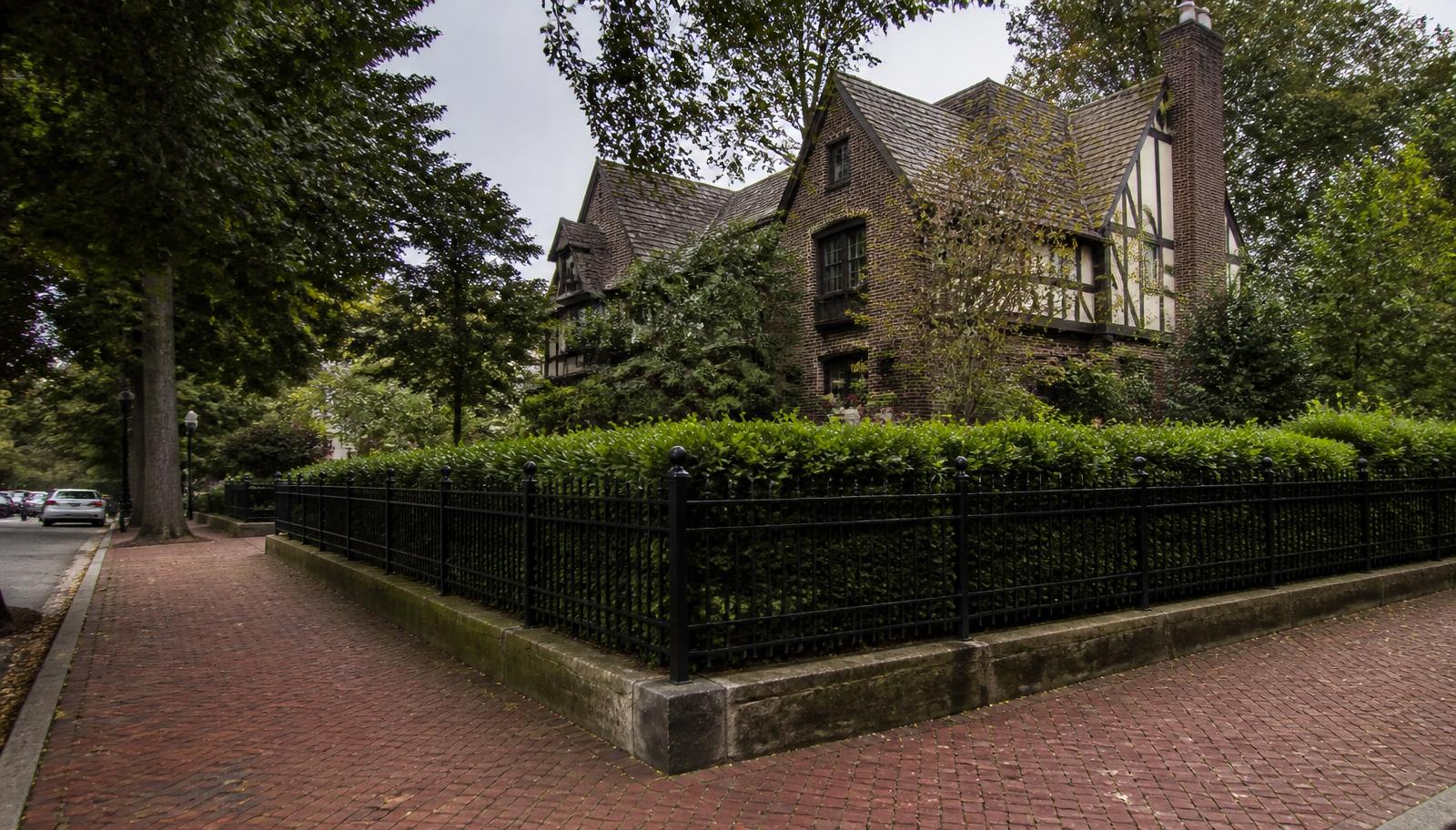
Elizabeth Compared
Elizabeth Compared
Six direct matchups against the Charlotte neighborhoods buyers cross-shop most often, with the specific factors that actually differ.
Buyers rarely decide on Elizabeth in a vacuum — they tour it alongside two or three of Charlotte's other historic, close-in neighborhoods and then work out which trade-offs actually matter to them. The comparisons below focus on the factors that come up repeatedly in those conversations: housing stock and scale, price positioning, review requirements, and daily walkability. Figures shift with the market, so treat the tables as a framework for comparison rather than a current price quote — verify anything transaction-relevant against Canopy MLS and POLARIS.
Elizabeth vs. Dilworth
These are Charlotte's two most comparable historic streetcar neighborhoods, and the closest true head-to-head on this list. Dilworth developed slightly earlier and sits marginally closer to uptown; Elizabeth's interior blocks offer a similar walkable, canopied feel with a somewhat later, more architecturally uniform bungalow stock.
| Factor | Elizabeth | Dilworth |
|---|---|---|
| Era developed | 1890s–1930s streetcar suburb | 1890s streetcar suburb, Charlotte's first |
| Dominant housing | Craftsman bungalows, Foursquares | Bungalows plus a wider range including larger Revival-style homes |
| Distance to uptown | ~1.2 miles | ~1 mile |
| Historic review | Locally designated district + National Register | Locally designated district + National Register |
| Best fit for | Buyers who want a tight-knit bungalow streetscape | Buyers who want the shortest uptown walk with historic character |
Read the full Elizabeth vs. Dilworth comparison →
Elizabeth vs. Plaza Midwood
Plaza Midwood trades some of Elizabeth's architectural uniformity for a livelier, more commercial main strip and a wider mix of housing ages and styles.
| Factor | Elizabeth | Plaza Midwood |
|---|---|---|
| Character | Quiet, uniform historic district | Eclectic mix of historic and postwar infill |
| Main commercial strip | Elizabeth Avenue | Central Avenue / The Plaza |
| Housing stock uniformity | High — consistent 1905–1930 bungalows | Lower — wider range of eras and styles |
| Historic review | Locally designated district | Not a locally designated historic district |
| Best fit for | Buyers who prize architectural consistency | Buyers who want nightlife and dining at the doorstep |
Read the full Elizabeth vs. Plaza Midwood comparison →
Elizabeth vs. Myers Park
The scale difference here is the whole story: Myers Park was planned from the outset as a grander, larger-lot suburb, and its housing and price points reflect that design intent. Buyers who want that side of the comparison in detail can read a dedicated Myers Park area guide.
| Factor | Elizabeth | Myers Park |
|---|---|---|
| Typical lot width | 50–70 feet | Substantially wider, often close to an acre on premier streets |
| Typical home size | Bungalow to Foursquare scale | Larger estate-scale homes |
| Street design | Grid, streetcar-era layout | Curving, John Nolen-designed boulevards |
| Price positioning | Upper tier for a bungalow-scale neighborhood | Among Charlotte's highest overall |
| Best fit for | Buyers wanting historic character at bungalow scale | Buyers wanting maximum land and home size in-town |
Read the full Elizabeth vs. Myers Park comparison →
Elizabeth vs. Cherry
Cherry carries its own significant history as one of Charlotte's earliest African American neighborhoods and has seen substantial redevelopment activity in recent years, giving it a housing mix quite different from Elizabeth's uniform historic stock.
| Factor | Elizabeth | Cherry |
|---|---|---|
| Housing stock | Consistent early-1900s bungalows | Mixed historic cottages and newer redevelopment |
| Distance to uptown | ~1.2 miles | Under 1 mile in parts |
| Historic designation | Locally designated district | Locally recognized historic significance without the same district-wide review |
| Redevelopment pace | Slow — mostly built out | Active — ongoing new construction |
| Best fit for | Buyers wanting a settled, uniform streetscape | Buyers interested in a changing, closer-in pocket |
Elizabeth vs. Chantilly
The two share a border and much of the same bungalow-era architecture — the meaningful difference is regulatory, not aesthetic.
| Factor | Elizabeth | Chantilly |
|---|---|---|
| Architecture | Craftsman bungalows, Foursquares, Colonial Revivals | Similar early-1900s bungalows and cottages |
| Historic district status | Locally designated — Certificate of Appropriateness required | Not locally designated |
| Exterior renovation flexibility | Constrained by design review | Greater owner flexibility |
| Streetscape consistency | High, protected by review | More variable over time |
| Best fit for | Buyers who value protected consistency | Buyers who want more renovation freedom |
Read the full Elizabeth vs. Chantilly comparison →
Elizabeth vs. Uptown / Fourth Ward
Fourth Ward offers the closest equivalent to Elizabeth's historic-residential feel actually inside uptown's boundary, at a real premium for the location.
| Factor | Elizabeth | Uptown / Fourth Ward |
|---|---|---|
| Location | East of uptown, ZIP 28204 | Within uptown's boundary |
| Density | Low-density single-family with corridor condos | Mixed historic houses and condo towers |
| Commute to uptown offices | Short drive, bikeable, partly walkable | Walking distance |
| Price positioning | Upper tier for in-town historic | Premium for uptown-adjacent condos and houses |
| Best fit for | Buyers wanting a traditional residential neighborhood | Buyers prioritizing the shortest possible uptown commute |
Continue reading
Go deeper on Elizabeth itself
Once you've compared the alternatives, here is the detail on Elizabeth's own housing stock and market.
Local representation
Touring more than one of these neighborhoods?
A single agent who knows all of them can save you weeks of comparing notes yourself. Peters & Associates works across Elizabeth, Dilworth, Plaza Midwood, and Myers Park and can set up a same-day comparison tour.
Charlotte Real Estate
Peters & Associatesyourleaderinluxury.comAdvertising disclosure. This is a paid or affiliated relationship: the firm above is affiliated with or compensates the publisher of this independent guide, and contacting it may result in a commercial engagement. It does not buy editorial placement. Full disclosure.
Questions & Answers
Frequently asked questions
Direct answers to what readers most often ask about this section of the guide. Each answer cites the primary source it rests on.
All Elizabeth questions →Is Elizabeth or Dilworth the better investment?
Both have strong, durable demand as close-in historic Charlotte neighborhoods, so the better "investment" mostly comes down to entry price relative to comparable houses and your own timeline. Dilworth sits marginally closer to uptown, which some buyers pay a premium for; Elizabeth's relative affordability on comparable house types has historically given it more room to appreciate. Compare specific, current comparables before assuming either has an edge.
Which is more walkable, Elizabeth or Plaza Midwood?
Both are genuinely walkable relative to most of Charlotte, but they're walkable to different things: Elizabeth's walk radius centers on Elizabeth Avenue's restaurants, Independence Park, and Presbyterian Medical Center, while Plaza Midwood's centers on the denser bar and restaurant strip along Central Avenue and The Plaza. Neither is more walkable in an absolute sense — they simply serve different daily routines.
Why does Myers Park cost so much more than Elizabeth?
Myers Park's premium mostly reflects larger lots, larger homes, and its early planned-suburb design with wide, landscaped boulevards, which together put much of its housing stock in a different size and price category than Elizabeth's bungalow-scale lots. It is not simply a "better" neighborhood — it is built to a different scale entirely.
Does Cherry compete directly with Elizabeth for buyers?
Not usually head-to-head, since Cherry's more mixed and rapidly redeveloping housing stock and its own distinct history as one of Charlotte's earliest African American neighborhoods give it a different profile than Elizabeth's uniform historic district. Buyers sometimes cross-shop the two for proximity to uptown, but they are choosing fairly different products.
Source: Charlotte Mecklenburg Library — Robinson-Spangler Carolina Room
Is Chantilly basically the same as Elizabeth?
Architecturally and geographically they are close cousins — Chantilly borders Elizabeth and shares similar-era bungalow housing — but Chantilly does not carry Elizabeth's local historic district designation, so exterior renovation there is not subject to Certificate of Appropriateness review. That single difference has a real effect on both streetscape consistency and owner flexibility.
Source: Charlotte Historic District Commission — design standards
Should I choose Elizabeth or Uptown/Fourth Ward for the shortest commute?
Fourth Ward, being inside uptown's boundary, generally offers the shortest possible walk or bike commute to uptown employers, while Elizabeth trades a slightly longer commute — still often under two miles — for lower density, more single-family housing, and a stronger sense of a traditional residential neighborhood.
Our Sources
How this page was researched
This guide is independently written and verified against primary public records and official organizations. It is not affiliated with, endorsed by, or representing any neighborhood association, hospital, college, school district, or governing body.
Read our full citation methodology and editorial standards- 01Charlotte-region housing market reports
Canopy Realtor® Association / Canopy MLS
Regional price, inventory, and days-on-market trends.
- 02POLARIS 3G property and parcel records
Mecklenburg County GIS
Parcel boundaries, lot sizes, ownership, and sale history.
- 03Survey and designation records for Charlotte's historic neighborhoods
Charlotte-Mecklenburg Historic Landmarks Commission
Historic designation, survey history, and landmark property records.
- 04American Community Survey — Charlotte, NC
U.S. Census Bureau
Population, household, and housing characteristics.
Figures such as pricing, assessments, business hours, and school assignment change over time. Always confirm current details directly with the source before making a decision.
Topic Cluster
Elizabeth Homes & Market
Housing stock, price bands, enclaves, and street-level value.
The Elizabeth Guide — Elizabeth Homes & Market →Elizabeth vs. Dilworth
The closest true head-to-head: two streetcar-era historic districts, compared factor by factor.
Continue →Elizabeth vs. Plaza Midwood
A protected period streetscape against Charlotte's most eclectic commercial strip.
Continue →Elizabeth vs. Myers Park
Bungalow scale and walkability against estate lots and a planned suburb.
Continue →Elizabeth vs. Chantilly
Near-identical architecture, very different historic review and renovation freedom.
Continue →Local Expertise
Work with the firms behind this guide
Last reviewed August 1, 2026. This guide keeps no contact form and no inbox — inquiries go directly to the firms below.