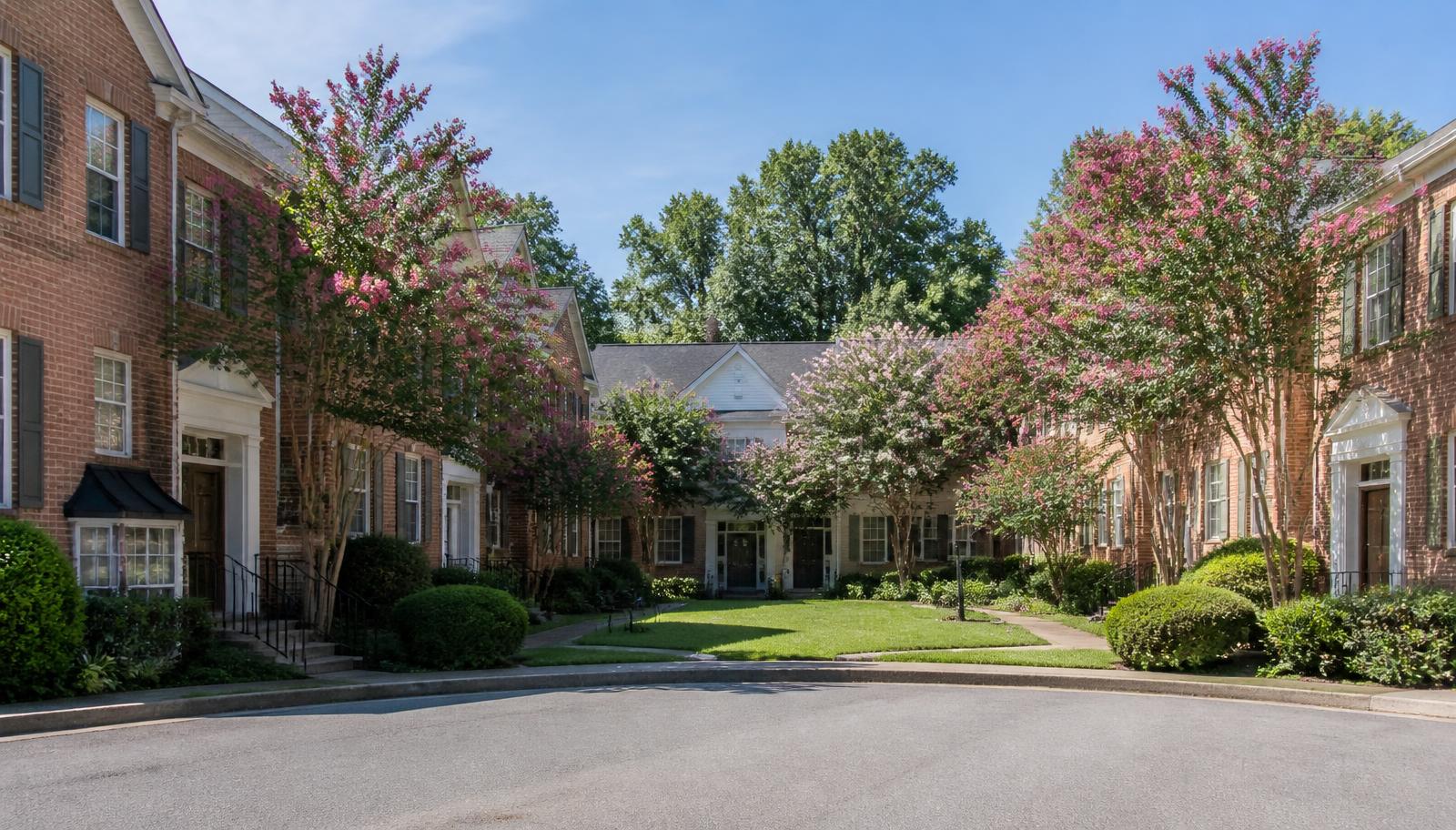
Historic pocket
Elizabeth Historic District
The locally designated core of the neighborhood, where willow oaks shade bungalows and Colonial Revival houses laid out along the original streetcar grid.
The locally designated core of the neighborhood, where willow oaks shade bungalows and Colonial Revival houses laid out along the original streetcar grid.
About Elizabeth Historic District
The Elizabeth Historic District follows the footprint of Charlotte's second suburban streetcar line, platted in the early 1890s and built out steadily through the 1920s. Its streets run in a loose grid east from the medical center toward Hawthorne Lane, interrupted by the diagonal cut of Elizabeth Avenue and the green wedge of Independence Park. Houses sit close to the sidewalk on lots that were narrow by later suburban standards, which is part of why the district still reads as a coherent whole rather than a collection of individually impressive properties.
Architecturally the district is a survey course in early twentieth century American residential styles. Craftsman bungalows with deep porches and exposed rafter tails predominate on the smaller lots, while Colonial Revival and Dutch Colonial houses with symmetrical facades and side-gabled roofs occupy the larger corner parcels, especially along East Seventh and East Eighth Streets. A handful of Tudor Revival and American Foursquare houses round out the mix, and most retain original wood siding, double-hung windows, and masonry porch piers.
Local historic district status means exterior changes visible from the street — additions, window replacement, roofline changes, new construction — require a Certificate of Appropriateness from the Charlotte Historic District Commission before a building permit is issued. This adds a review step to renovation projects but has also been the primary reason the streetscape has stayed legible for more than a century, resisting the teardown pressure that reshaped some nearby areas.
Daily life here trades car dependence for walkability. Residents can reach Independence Park, a handful of coffee shops, and the Elizabeth Avenue corridor on foot, and the commute into uptown is a five to ten minute drive or a longer walk along Hawthorne Lane. The tradeoff is functional: many houses have one working fireplace chimney, updated but modestly sized kitchens, and driveways that predate two-car households, so on-street parking is a fact of life on the tightest blocks.
On the market, fully restored houses with updated systems and additions that respect the original massing tend to command the top of the range, while houses still carrying original wiring, plumbing, or a leaking foundation trade at a discount that reflects the coming capital investment. Buyers who plan to renovate should budget time for the Certificate of Appropriateness process alongside standard permitting, particularly for any work visible from the public right of way.
What defines it
- Locally designated historic district with Certificate of Appropriateness review
- Willow oak canopy along most interior streets
- Walking distance to Independence Park and Elizabeth Avenue
- Mix of Craftsman bungalows and Colonial Revival houses
- Narrow lots and largely intact early-twentieth-century streetscape
Housing summary
| Type | Historic pocket |
|---|---|
| Building era | 1905–1930 |
| Scale | roughly 800–900 contributing structures |
| Typical range | $500,000–$1.4 million |
| Principal streets | East 5th Street, East 7th Street, East 8th Street, Hawthorne Lane, Clement Avenue, Lamar Avenue |
Ranges are general characterizations rather than appraisals, and turnover in a market this small can move them quickly. Verify current figures against Canopy MLS and parcel records on Mecklenburg County POLARIS before relying on them.
Block by block
Streets in and around Elizabeth Historic District
Character, building era, and daily conditions street by street.
Keep exploring
Other communities and enclaves
Local representation
Looking at Elizabeth Historic District?
Condition, review requirements, and street-level differences drive value here more than any neighborhood average. Peters & Associates works Elizabeth specifically and can walk a property with you before you write an offer.
Charlotte Real Estate
Peters & Associatesyourleaderinluxury.comAdvertising disclosure. This is a paid or affiliated relationship: the firm above is affiliated with or compensates the publisher of this independent guide, and contacting it may result in a commercial engagement. It does not buy editorial placement. Full disclosure.
Questions & Answers
Frequently asked questions
Direct answers to what readers most often ask about this section of the guide. Each answer cites the primary source it rests on.
All Elizabeth questions →Is all of Elizabeth a local historic district?
No. Only a defined core area carries local historic district designation and Certificate of Appropriateness review; surrounding blocks of Elizabeth are part of the neighborhood but not under that specific overlay. Boundaries should be confirmed with the Charlotte-Mecklenburg Historic Landmarks Commission before planning exterior work.
Source: Charlotte Historic District Commission — design standards
Do I need approval to repaint my house?
Routine repainting in a similar color scheme typically does not require a Certificate of Appropriateness, but any question about color, material, or scope is worth a quick check with the Historic District Commission staff before starting.
Source: Charlotte Historic District Commission — design standards
How old are most of the houses?
The bulk of the housing stock dates from roughly 1905 to 1930, with infill and rebuilds from later decades scattered throughout, especially on lots where earlier structures were lost to fire or demolition.
Source: City of Charlotte
Our Sources
How this page was researched
This guide is independently written and verified against primary public records and official organizations. It is not affiliated with, endorsed by, or representing any neighborhood association, hospital, college, school district, or governing body.
Read our full citation methodology and editorial standards- 01POLARIS 3G property and parcel records
Mecklenburg County GIS
Parcel boundaries, lot sizes, ownership, and sale history.
- 02Charlotte-region housing market reports
Canopy Realtor® Association / Canopy MLS
Regional price, inventory, and days-on-market trends.
- 03Survey and designation records for Charlotte's historic neighborhoods
Charlotte-Mecklenburg Historic Landmarks Commission
Historic designation, survey history, and landmark property records.
- 04Local historic district design standards and review process
City of Charlotte Historic District Commission
Certificate of Appropriateness requirements for exterior work.
Figures such as pricing, assessments, business hours, and school assignment change over time. Always confirm current details directly with the source before making a decision.
Topic Cluster
Elizabeth Homes & Market
Housing stock, price bands, enclaves, and street-level value.
The Elizabeth Guide — Elizabeth Homes & Market →Elizabeth Homes & Real Estate
Housing stock, price bands, and how this small historic market actually trades.
Continue →Elizabeth Neighborhood, Charlotte NC
The whole neighborhood on one page: place, history, architecture, district, market, and daily life.
Continue →Elizabeth Market Data
Price per square foot, inventory, and what drives value street to street.
Continue →Communities, Buildings & Enclaves
Every pocket, condo building, and infill community in and around Elizabeth.
Continue →Local Expertise
Work with the firms behind this guide
Last reviewed August 1, 2026. This guide keeps no contact form and no inbox — inquiries go directly to the firms below.