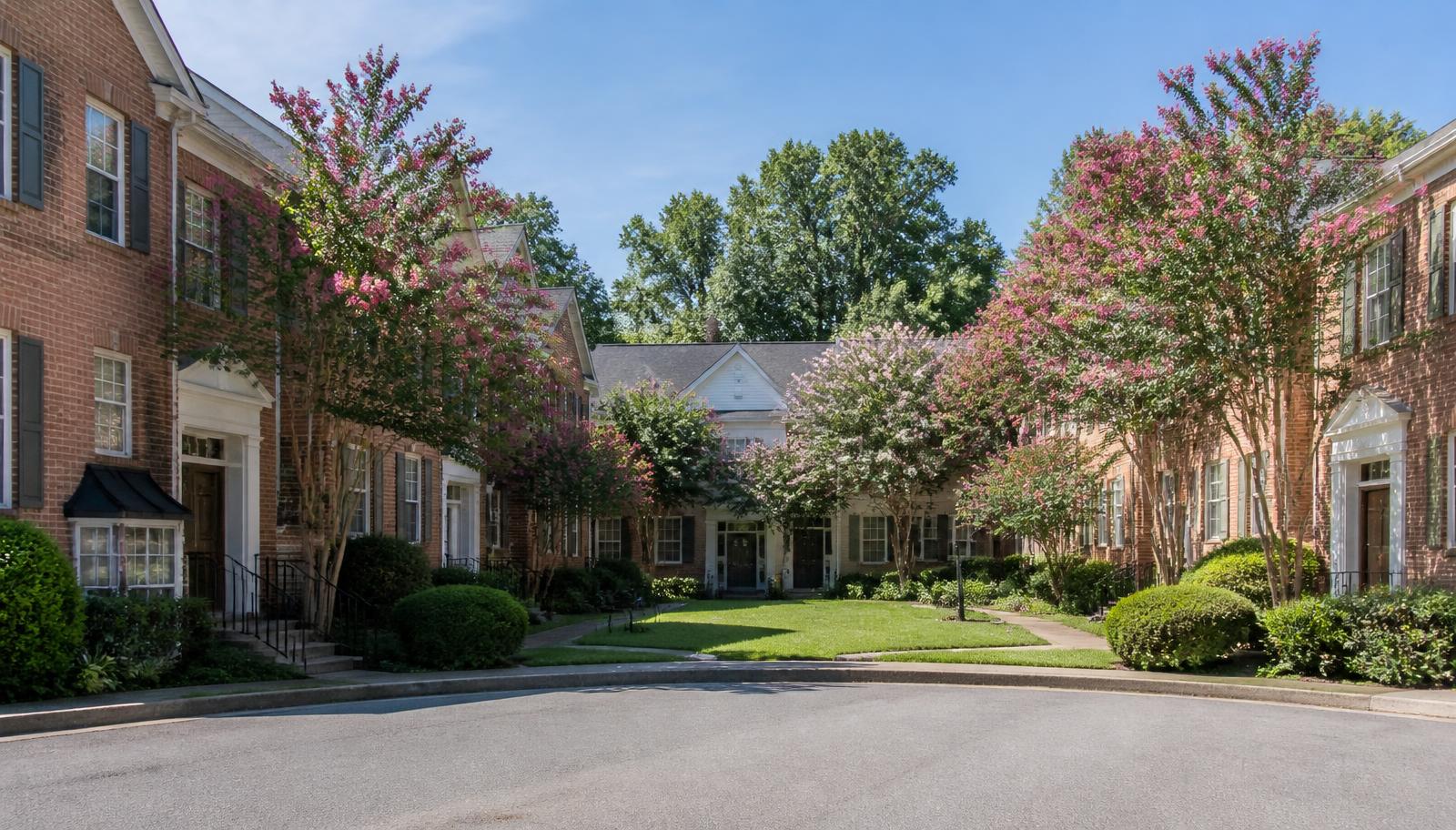
Adjacent neighborhood
Cherry
One of Charlotte's oldest African American neighborhoods, immediately south of Elizabeth and Eastover, historically linked to Elizabeth's early streetcar-era development.
One of Charlotte's oldest African American neighborhoods, immediately south of Elizabeth and Eastover, historically linked to Elizabeth's early streetcar-era development.
About Cherry
Cherry was established in the 1890s as a residential community for Black domestic and service workers employed in nearby Myers Park and Eastover, making it one of Charlotte's oldest continuously inhabited African American neighborhoods and a historical counterpart to Elizabeth's growth in the same decade.
The housing stock is smaller in scale than Elizabeth's — modest frame cottages on tight lots, with newer infill construction filling gaps left by decades of disinvestment and, more recently, redevelopment pressure. Streets are narrower and the canopy is lighter than in Elizabeth proper, though mature trees remain along several blocks.
Cherry's location, wedged between Eastover, Myers Park, and Elizabeth, has made it a focus of both preservation advocacy and redevelopment interest over the past two decades, and residents and researchers should approach the neighborhood's history with attention to its specific community rather than treating it as an extension of Elizabeth.
Cherry should be read on its own terms, and that starts with who built it and why. It was platted for working people at a moment when Charlotte's wealthier new suburbs required a nearby labour force but would not house it, and the result is a street pattern and lot size scaled to that purpose: narrow parcels, short setbacks, cottages sized for a family rather than for display. Understanding that origin explains almost everything a visitor notices, including why the blocks feel tighter than Elizabeth's and why the canopy is uneven where later road widening removed trees.
The neighbourhood's twentieth century included the same disinvestment that shaped historically Black neighbourhoods across the Southeast — insurance and lending practices that starved maintenance capital, followed by public projects that took land. What survives is therefore not a full original fabric but a partial one, with gaps that later filled in unevenly. Some of that infill was public or nonprofit housing; some is recent market-rate construction at a scale and price the original blocks never carried. The visual result is a neighbourhood in the middle of a transition it did not choose, which is exactly why local preservation advocates have pushed for documentation.
For anyone comparing Cherry with Elizabeth as a place to buy, the honest framing is that they are not substitutes. Cherry's entry prices are lower and its location — wedged against Eastover and Myers Park — is arguably better connected than parts of Elizabeth. But the housing stock is smaller, the design-review protections that stabilise Elizabeth's streetscape do not apply in the same way, and the trajectory of the blocks is being set right now by decisions about individual parcels. A buyer here is buying into an active conversation about the neighbourhood's future, and should approach it with that awareness rather than treating it as an undervalued extension of a more expensive address.
What defines it
- One of Charlotte's oldest African American neighborhoods
- Historic ties to Elizabeth, Myers Park, and Eastover's early labor history
- Smaller-scale cottages alongside newer infill
- Active subject of preservation and redevelopment discussion
Housing summary
| Type | Adjacent neighborhood |
|---|---|
| Building era | 1891–1930s |
| Scale | roughly 300 homes |
| Typical range | $300,000–$650,000 |
| Principal streets | Baxter Street, Cherry Street |
Ranges are general characterizations rather than appraisals, and turnover in a market this small can move them quickly. Verify current figures against Canopy MLS and parcel records on Mecklenburg County POLARIS before relying on them.
Block by block
Streets in and around Cherry
Character, building era, and daily conditions street by street.
Keep exploring
Other communities and enclaves
Local representation
Looking at Cherry?
Condition, review requirements, and street-level differences drive value here more than any neighborhood average. Peters & Associates works Elizabeth specifically and can walk a property with you before you write an offer.
Charlotte Real Estate
Peters & Associatesyourleaderinluxury.comAdvertising disclosure. This is a paid or affiliated relationship: the firm above is affiliated with or compensates the publisher of this independent guide, and contacting it may result in a commercial engagement. It does not buy editorial placement. Full disclosure.
Questions & Answers
Frequently asked questions
Direct answers to what readers most often ask about this section of the guide. Each answer cites the primary source it rests on.
All Elizabeth questions →Is Cherry part of Elizabeth?
No. Cherry is its own historic neighborhood immediately adjacent to Elizabeth, Myers Park, and Eastover, with a distinct founding history and identity.
Where can I learn Cherry's history in depth?
The Robinson-Spangler Carolina Room at Charlotte Mecklenburg Library maintains local history archives that document Cherry's founding and its residents over time.
Source: Charlotte Mecklenburg Library — Robinson-Spangler Carolina Room
Why do prices in Cherry vary so much block to block?
Because the housing stock does. An original cottage that has never been renovated, a nonprofit-built house from the 1990s and a recent market-rate infill house can sit within sight of each other, and each carries a different condition, size and tax basis. Pull the specific parcel's records rather than reasoning from a neighbourhood average.
Where should I go to understand Cherry's history properly?
Start with the Charlotte Mecklenburg Library's Robinson-Spangler Carolina Room and the Charlotte-Mecklenburg Historic Landmarks Commission's survey material, then look for material produced by residents and community organisations themselves. Cherry's history is documented by people who lived it, and their accounts should carry more weight than a real estate summary.
Our Sources
How this page was researched
This guide is independently written and verified against primary public records and official organizations. It is not affiliated with, endorsed by, or representing any neighborhood association, hospital, college, school district, or governing body.
Read our full citation methodology and editorial standards- 01POLARIS 3G property and parcel records
Mecklenburg County GIS
Parcel boundaries, lot sizes, ownership, and sale history.
- 02Charlotte-region housing market reports
Canopy Realtor® Association / Canopy MLS
Regional price, inventory, and days-on-market trends.
- 03Survey and designation records for Charlotte's historic neighborhoods
Charlotte-Mecklenburg Historic Landmarks Commission
Historic designation, survey history, and landmark property records.
- 04Local historic district design standards and review process
City of Charlotte Historic District Commission
Certificate of Appropriateness requirements for exterior work.
Figures such as pricing, assessments, business hours, and school assignment change over time. Always confirm current details directly with the source before making a decision.
Topic Cluster
Elizabeth Homes & Market
Housing stock, price bands, enclaves, and street-level value.
The Elizabeth Guide — Elizabeth Homes & Market →Elizabeth Homes & Real Estate
Housing stock, price bands, and how this small historic market actually trades.
Continue →Elizabeth Neighborhood, Charlotte NC
The whole neighborhood on one page: place, history, architecture, district, market, and daily life.
Continue →Elizabeth Market Data
Price per square foot, inventory, and what drives value street to street.
Continue →Communities, Buildings & Enclaves
Every pocket, condo building, and infill community in and around Elizabeth.
Continue →Local Expertise
Work with the firms behind this guide
Last reviewed August 1, 2026. This guide keeps no contact form and no inbox — inquiries go directly to the firms below.