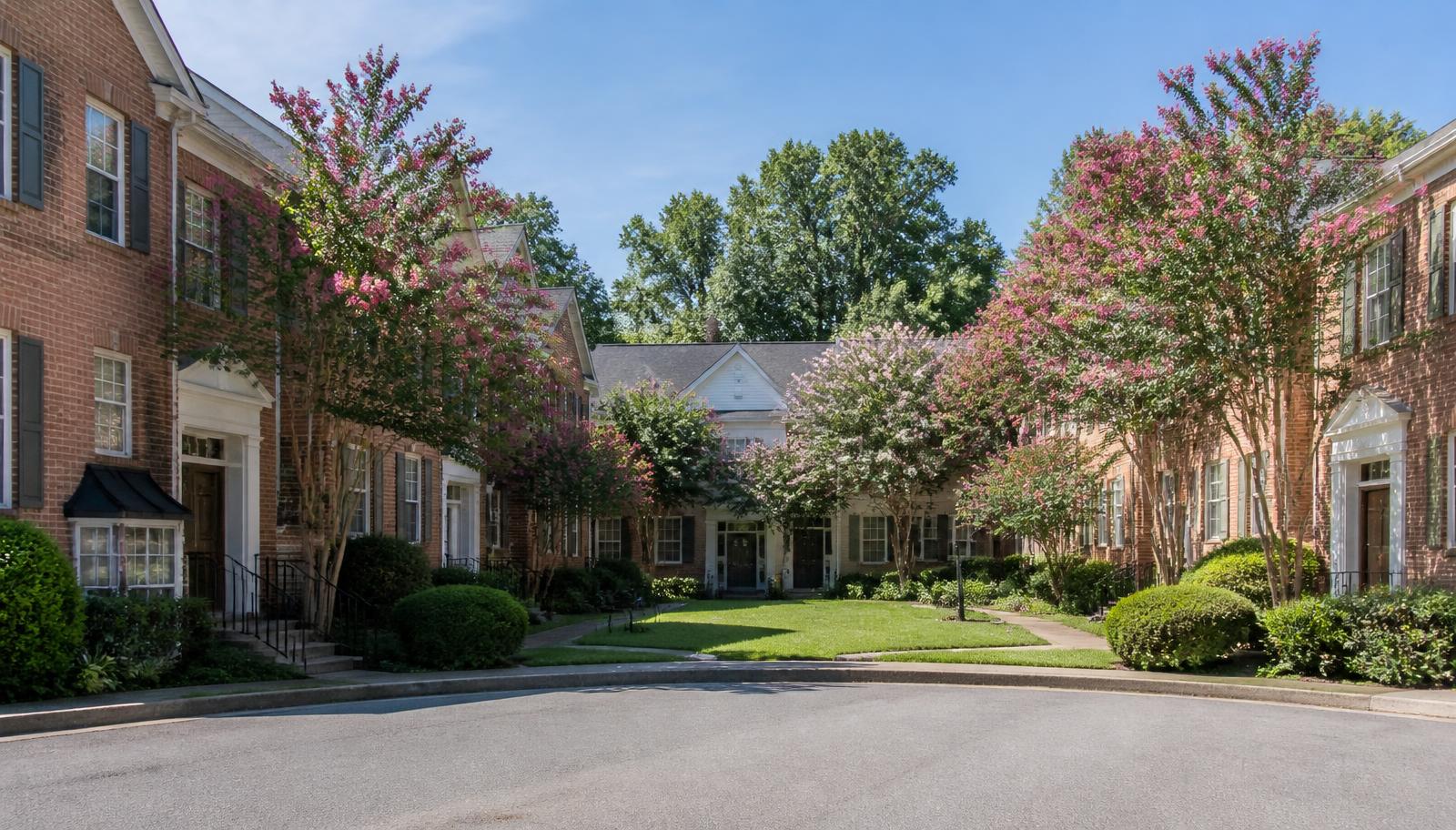
Adjacent neighborhood
Villa Heights
A working-class streetcar suburb just north of Elizabeth and Plaza Midwood, with smaller mill-era cottages and a rapidly changing housing market.
A working-class streetcar suburb just north of Elizabeth and Plaza Midwood, with smaller mill-era cottages and a rapidly changing housing market.
About Villa Heights
Villa Heights developed in the early twentieth century as housing for workers connected to nearby industry and to the streetcar lines running toward NoDa and Belmont. Its cottages are generally smaller and simpler than Elizabeth's bungalows, built quickly and economically rather than to Colonial Revival pattern-book designs.
The neighborhood sits along the Little Sugar Creek and Belmont corridor and has seen substantial turnover over the past fifteen years, with older cottages renovated or replaced by new construction as buyers priced out of Elizabeth and Plaza Midwood look for value nearby.
For someone comparing Villa Heights to Elizabeth, the tradeoff is straightforward: a lower entry price and a shorter commute to NoDa's arts district, against a less mature canopy, a more uneven mix of renovated and unrenovated housing, and fewer sidewalks on some blocks.
Villa Heights is the clearest illustration nearby of what happens to a modest early-twentieth-century neighbourhood when demand arrives without a design-review overlay to shape it. The original stock was built cheaply and quickly: small frame cottages, shallow porches, simple gable roofs, four or five rooms. Over the past fifteen years buyers priced out of Elizabeth and Plaza Midwood have bought those cottages, and what happened next varied entirely by owner. Some were carefully restored. Some were doubled in size with rear and upward additions. Some were removed and replaced with houses two and three times the original volume. All three outcomes now sit on the same block.
That variation is the neighbourhood's defining financial characteristic. In a district with review, a buyer can reason about the future of the streetscape with some confidence. Here, the house next door can change fundamentally within a year of a sale, and the change can raise or complicate the value of what you own depending on how it is executed. Neither outcome is unusual and neither is prevented. Buyers who care about that should walk the specific block and look at what has already happened on it, which is the best available indicator of what will happen next.
Against that risk sit real advantages. Entry prices remain below Elizabeth's historic core. The NoDa arts district and the Little Sugar Creek and Cross Charlotte trail corridors are close. Lot sizes are often generous relative to the small original houses, which is precisely why addition and replacement activity has been heavy. For a buyer whose priority is square footage and proximity for the money, and who is comfortable with a streetscape still finding its final form, Villa Heights offers something Elizabeth structurally cannot.
What defines it
- Smaller, simpler cottages than Elizabeth's bungalow stock
- Close to NoDa's gallery and restaurant district
- Significant renovation and infill activity in recent years
- Generally lower entry price point than Elizabeth
Housing summary
| Type | Adjacent neighborhood |
|---|---|
| Building era | 1900s–1940s |
| Scale | roughly 400 homes |
| Typical range | $275,000–$500,000 |
| Principal streets | North Davidson Street, Parkwood Avenue |
Ranges are general characterizations rather than appraisals, and turnover in a market this small can move them quickly. Verify current figures against Canopy MLS and parcel records on Mecklenburg County POLARIS before relying on them.
Keep exploring
Other communities and enclaves
Local representation
Looking at Villa Heights?
Condition, review requirements, and street-level differences drive value here more than any neighborhood average. Peters & Associates works Elizabeth specifically and can walk a property with you before you write an offer.
Charlotte Real Estate
Peters & Associatesyourleaderinluxury.comAdvertising disclosure. This is a paid or affiliated relationship: the firm above is affiliated with or compensates the publisher of this independent guide, and contacting it may result in a commercial engagement. It does not buy editorial placement. Full disclosure.
Questions & Answers
Frequently asked questions
Direct answers to what readers most often ask about this section of the guide. Each answer cites the primary source it rests on.
All Elizabeth questions →Is Villa Heights walkable to Elizabeth?
It is close by car or bike, roughly ten minutes, but the two neighborhoods are not directly walkable from most points given the distance and the routes available.
Does Villa Heights have historic district protection?
It does not carry the same local historic district status as Elizabeth's core, which is one reason it has seen more teardown and new-construction activity.
Is buying in Villa Heights riskier than buying in Elizabeth?
Different, not simply riskier. Elizabeth's design review makes the streetscape predictable and renovation slower and more expensive. Villa Heights has neither the constraint nor the protection, so a block can improve or change character faster. Match that to your holding period and your tolerance for construction next door.
Source: City of Charlotte tree canopy and tree ordinance program
Can I walk from Villa Heights to Elizabeth?
It is walkable in the sense that the distance is modest, but the route crosses busy arterials and rail infrastructure rather than a continuous residential grid, so most residents drive or bike between the two. Test the specific route on foot at the time of day you would actually use it before assuming it works.
Source: Charlotte Area Transit System — routes and the Gold Line streetcar
Our Sources
How this page was researched
This guide is independently written and verified against primary public records and official organizations. It is not affiliated with, endorsed by, or representing any neighborhood association, hospital, college, school district, or governing body.
Read our full citation methodology and editorial standards- 01POLARIS 3G property and parcel records
Mecklenburg County GIS
Parcel boundaries, lot sizes, ownership, and sale history.
- 02Charlotte-region housing market reports
Canopy Realtor® Association / Canopy MLS
Regional price, inventory, and days-on-market trends.
- 03Survey and designation records for Charlotte's historic neighborhoods
Charlotte-Mecklenburg Historic Landmarks Commission
Historic designation, survey history, and landmark property records.
- 04Local historic district design standards and review process
City of Charlotte Historic District Commission
Certificate of Appropriateness requirements for exterior work.
Figures such as pricing, assessments, business hours, and school assignment change over time. Always confirm current details directly with the source before making a decision.
Topic Cluster
Elizabeth Homes & Market
Housing stock, price bands, enclaves, and street-level value.
The Elizabeth Guide — Elizabeth Homes & Market →Elizabeth Homes & Real Estate
Housing stock, price bands, and how this small historic market actually trades.
Continue →Elizabeth Neighborhood, Charlotte NC
The whole neighborhood on one page: place, history, architecture, district, market, and daily life.
Continue →Elizabeth Market Data
Price per square foot, inventory, and what drives value street to street.
Continue →Communities, Buildings & Enclaves
Every pocket, condo building, and infill community in and around Elizabeth.
Continue →Local Expertise
Work with the firms behind this guide
Last reviewed August 1, 2026. This guide keeps no contact form and no inbox — inquiries go directly to the firms below.