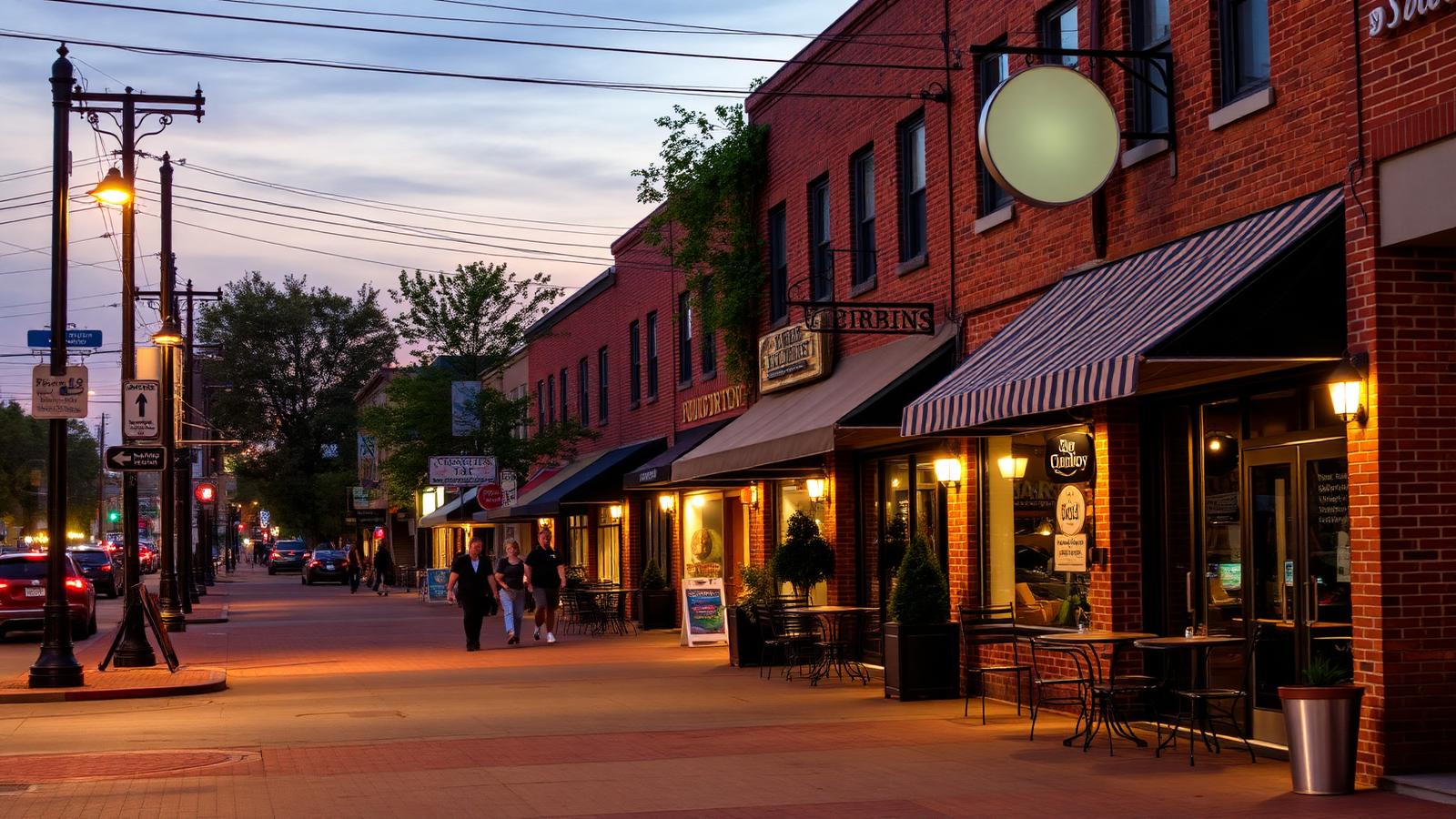
Neighborhood comparison
Elizabeth vs. Plaza Midwood
Two east-side favorites with opposite instincts: one protects a consistent period streetscape, the other embraces variety and a livelier main street.
The short answer
Elizabeth is the more protected, more architecturally consistent neighborhood; Plaza Midwood is the more varied, more commercially energetic one. Elizabeth's blocks read as a period piece because a local historic district keeps them that way. Plaza Midwood's appeal is precisely that it was never held to one look — bungalows sit near mid-century infill and near new construction, and its Central Avenue spine carries far more nightlife than Elizabeth Avenue ever has.
Comparison at a glance
| Factor | Elizabeth | Plaza Midwood |
|---|---|---|
| Overall character | Quiet, uniform historic residential district | Eclectic mix of eras, styles, and infill |
| Housing stock | Consistent early-1900s bungalows and foursquares | Bungalows plus postwar houses and newer construction |
| Main commercial strip | Elizabeth Avenue — restaurants, café, college edge | Central Avenue and The Plaza — bars, restaurants, shops |
| Nightlife | Modest; dinner rather than late night | Substantial and a core part of the neighborhood's identity |
| Historic review | Local historic district; Certificate of Appropriateness can apply | No neighborhood-wide local district review |
| Renovation flexibility | Constrained on street-visible exteriors | Governed by zoning and permitting rather than design review |
| Green space | Independence Park; Little Sugar Creek Greenway edge | Neighborhood parks and Briar Creek-area green space |
| Uptown access | Immediately east of uptown across the Independence corridor | Farther out along Central Avenue |
| Best fit for | Buyers who prize consistency, quiet, and proximity to uptown and the hospital | Buyers who want variety, nightlife, and more freedom to alter a house |
What the historic district really changes
This is the difference with the longest tail. In Elizabeth's designated blocks, changes to street-facing exteriors — windows, porches, siding, roof forms, additions that read from the street — run through Historic District Commission review before permitting. That produces the streetscape people move here for, and it also means your renovation has a design-review stage with its own timeline and its own vocabulary.
In Plaza Midwood, that stage generally does not exist, which is why you see wider variation in how houses have been updated and expanded. Neither approach is objectively better; they optimize for different things. If you intend to renovate substantially, read our historic district guide and renovation guide before choosing, because the answer changes what you can build.
Daily life
Elizabeth's rhythm is residential first: porches, the park loop, a short walk to dinner, and the constant background presence of a major hospital campus and a community college. Plaza Midwood's rhythm is commercial first: the strip is the neighborhood's living room, and the housing radiates out from it.
Practically, that shows up in noise, parking, and who is on your sidewalk at 11pm. It also shows up in what you stop driving for. Elizabeth residents often stop driving for dinner, coffee, the park, and medical appointments. Plaza Midwood residents more often stop driving for bars, live music, and everyday shopping.
Housing and value
Elizabeth's uniformity makes comparables easier to read: houses of similar era, similar lot width, and similar condition trade in a fairly legible band. Plaza Midwood's mix makes comparables harder — a 1925 bungalow, a 1958 ranch, and a 2021 infill house on the same street are not the same product, and averaging them tells you very little.
For either neighborhood, do the comparison at the house level with current Canopy MLS data and verify lot and structure facts against Mecklenburg County POLARIS. Our Elizabeth market data page explains which variables move price most inside Elizabeth specifically.
Who should choose which
- Choose Elizabeth for a protected period streetscape, quieter interior blocks, and the shortest reach to uptown, the hospital campus, and Central Piedmont.
- Choose Plaza Midwood for nightlife within walking distance, a wider range of house types and price points, and more freedom to change a house's exterior.
Continue reading
Other Elizabeth comparisons
The rest of the head-to-head set, plus the Elizabeth pages behind each claim.
Local representation
Not sure which side of Central Avenue you belong on?
This comparison usually resolves itself after one evening spent in each neighborhood. Peters & Associates shows in both and can tell you candidly which one fits the way you actually spend a Tuesday.
Charlotte Real Estate
Peters & Associatesyourleaderinluxury.comAdvertising disclosure. This is a paid or affiliated relationship: the firm above is affiliated with or compensates the publisher of this independent guide, and contacting it may result in a commercial engagement. It does not buy editorial placement. Full disclosure.
Questions & Answers
Frequently asked questions
Direct answers to what readers most often ask about this section of the guide. Each answer cites the primary source it rests on.
All Elizabeth questions →Are Elizabeth and Plaza Midwood next to each other?
They are close but not directly adjacent along most of their edges — Chantilly and the Commonwealth area sit between them, and Central Avenue is the connecting spine. It is a short drive or a moderate bike ride from Elizabeth to the Central Avenue and The Plaza commercial core, which is why buyers routinely tour both in one day.
Which is more walkable, Elizabeth or Plaza Midwood?
Both are walkable relative to most of Charlotte, but to different things. Elizabeth's walk radius centers on Elizabeth Avenue restaurants, Independence Park, the hospital campus, and Central Piedmont. Plaza Midwood's centers on a denser, longer strip of bars, restaurants, and shops along Central Avenue. Walkability here is a question of what you want within a ten-minute walk, not of one being objectively better.
Is Plaza Midwood a historic district like Elizabeth?
Not in the same regulatory sense. Elizabeth contains a locally designated historic district where exterior work on contributing properties can require a Certificate of Appropriateness from the Charlotte Historic District Commission. Plaza Midwood is an older neighborhood with historic housing, but it does not carry that same neighborhood-wide local district review. Verify the status of any specific parcel before planning exterior work.
Source: Charlotte Historic District Commission — design standards
Which neighborhood is quieter?
Elizabeth's interior residential blocks are generally quieter, because its commercial activity is concentrated on Elizabeth Avenue and the Seventh Street edge rather than running through the middle of the neighborhood. Plaza Midwood's core is livelier at night. That said, Elizabeth blocks near the hospital campus and the Independence Boulevard corridor carry their own traffic and siren noise — this is a block-level question in both places.
Source: City of Charlotte tree canopy and tree ordinance program
Which has more renovation freedom?
Plaza Midwood, generally. Without neighborhood-wide local historic district review, exterior alterations there are governed by zoning and building permitting rather than design review. In Elizabeth's designated blocks, exterior changes visible from the street may require a Certificate of Appropriateness, which adds a review step and constrains material and massing choices.
Source: Charlotte Historic District Commission — design standards
Our Sources
How this page was researched
This guide is independently written and verified against primary public records and official organizations. It is not affiliated with, endorsed by, or representing any neighborhood association, hospital, college, school district, or governing body.
Read our full citation methodology and editorial standards- 01Survey and designation records for Charlotte's historic neighborhoods
Charlotte-Mecklenburg Historic Landmarks Commission
Historic designation, survey history, and landmark property records.
- 02Local historic district design standards and review process
City of Charlotte Historic District Commission
Certificate of Appropriateness requirements for exterior work.
- 03POLARIS 3G property and parcel records
Mecklenburg County GIS
Parcel boundaries, lot sizes, ownership, and sale history.
- 04Charlotte-region housing market reports
Canopy Realtor® Association / Canopy MLS
Regional price, inventory, and days-on-market trends.
- 05Transit routes, the Gold Line streetcar, and commute planning
Charlotte Area Transit System
Streetcar, bus, and rail options serving the neighborhood.
Figures such as pricing, assessments, business hours, and school assignment change over time. Always confirm current details directly with the source before making a decision.
Topic Cluster
Elizabeth Homes & Market
Housing stock, price bands, enclaves, and street-level value.
The Elizabeth Guide — Elizabeth Homes & Market →Elizabeth Compared
Elizabeth against Dilworth, Plaza Midwood, Myers Park, and Cherry.
Continue →Walkability & Getting Around
What is genuinely walkable from each block, and what still needs a car.
Continue →Elizabeth Restaurants & Dining
Every restaurant, café, bakery, and bar within walking distance.
Continue →The Elizabeth Historic District
Designation, boundaries, and what review means before you touch a façade.
Continue →Local Expertise
Work with the firms behind this guide
Last reviewed August 1, 2026. This guide keeps no contact form and no inbox — inquiries go directly to the firms below.