Apartments & Rentals
Elizabeth Apartments & Rentals
Renting inside Charlotte's oldest streetcar suburb — where the inventory is, what it costs to live there, and what a lease here should spell out.
Elizabeth reads as a neighborhood of owner-occupied bungalows, and on the interior streets that is largely accurate. But the neighborhood has always housed renters too — students, hospital staff, residents finishing training, young professionals working uptown, and long-tenured tenants in houses that were split into units decades ago. What confuses newcomers is that the rental market and the ownership market barely overlap geographically. The houses are inside the district; the apartments are almost entirely on the edges of it.
Three rental products, three very different experiences
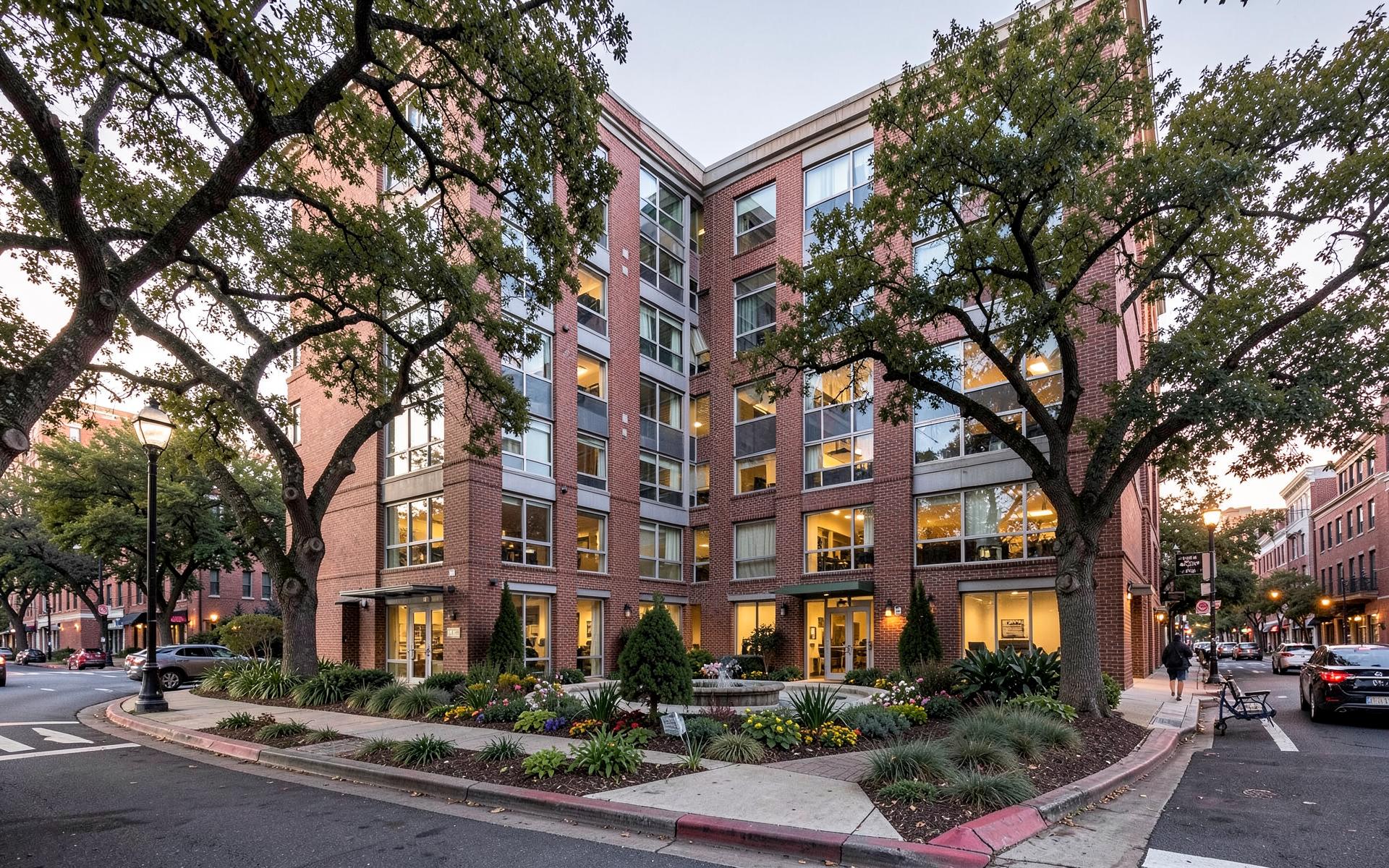
Newer corridor mid-rises. The mixed-use buildings along Elizabeth Avenue and the Seventh Street approach are the most conventional rental product in the neighborhood: leasing office, structured or deeded parking, package room, fitness space, and predictable maintenance. They command the highest rents per square foot in the neighborhood and they are the easiest option for someone relocating sight-unseen.
Mid-century low-rise walk-ups. Two- and three-story brick buildings from roughly the 1960s through the 1980s sit scattered along the corridor and on a few boundary streets. They are the affordable end of the neighborhood: bigger floor plans than their rent suggests, surface-lot parking that is not always assigned, and building systems whose age shows up in summer utility bills. Ask when the windows, HVAC, and roof were last replaced — the answer usually explains the price.
Rented houses, duplexes, and garage apartments. This is the only way to actually live on an interior Elizabeth street as a renter. Supply is thin and moves through word of mouth and individual landlords as often as through listing portals. The upside is the neighborhood itself — porch, canopy, yard, walk to Independence Park. The tradeoffs are single-owner maintenance, uneven insulation and window quality, and parking that may be a shared driveway.
What actually changes between blocks
Four variables move the daily experience more than the unit itself does: distance to the Gold Line streetcar stop and to the hospital campuses, how much through-traffic the street carries, whether the block has restricted residential parking, and how deep the willow oak canopy is. Two apartments at identical rents can be a quiet, shaded, ten-minute walk from a hospital shift or a loud, exposed block where every arriving car circles for a space. Walk the block twice — once at 8am on a weekday, once on a Friday evening — before signing anything.
What to verify before you sign
Get the number of off-street spaces in writing, not verbally. Confirm which utilities are landlord-paid, and on older buildings ask for a typical July and January bill. Ask whether the building or the individual owner handles after-hours maintenance and what the response window is. If the unit is in a condo building rather than an apartment community, confirm the association's minimum lease term — a landlord can offer a six-month lease the building's own documents do not permit. And if the property sits in the historic district, understand that exterior changes, including some window and porch work you might want, are subject to review and are not the landlord's to grant.
Renting as a path to buying here
Elizabeth's for-sale inventory is small, and the best houses trade quickly to buyers who already know the streets. Renting in the neighborhood for a year is the standard local playbook: it puts you close enough to hear about a house before it lists, and it settles questions — corridor noise, canopy, parking, school assignment, commute on foot — that no listing photo answers. Pair a lease here with the buying sequence in the buyer's guide and you will make a far better offer when your street comes available.
Internal links
Where the rental inventory sits
The corridors, buildings, and enclaves that hold most of the neighborhood's apartments.
Renting now, buying later
A lease here is the cheapest way to test a street
Elizabeth changes character block to block. Peters & Associates can tell you which streets tend to come available, what they trade for, and when it makes sense to stop renting and buy in.
Charlotte Real Estate
Peters & Associatesyourleaderinluxury.comAdvertising disclosure. This is a paid or affiliated relationship: the firm above is affiliated with or compensates the publisher of this independent guide, and contacting it may result in a commercial engagement. It does not buy editorial placement. Full disclosure.
Questions & Answers
Frequently asked questions
Direct answers to what readers most often ask about this section of the guide. Each answer cites the primary source it rests on.
All Elizabeth questions →Are there apartments for rent in Elizabeth, Charlotte?
Yes. Almost all of Elizabeth's purpose-built rental inventory sits on the corridors that frame the historic district — Elizabeth Avenue, Seventh Street, Hawthorne Lane, and the blocks nearest the two hospital campuses and Central Piedmont Community College — rather than on the interior residential streets, which are overwhelmingly single-family. Expect a mix of newer mixed-use mid-rises with ground-floor retail, mid-century low-rise walk-ups, and individually rented houses, duplexes, and garage apartments inside the district itself.
Source: City of Charlotte tree canopy and tree ordinance program
What does it cost to rent an apartment in the Elizabeth area?
Rents here track in-town Charlotte pricing rather than suburban pricing, and they vary far more by building age than by square footage: a newer mid-rise unit with structured parking and amenity space commands a clear premium over an older walk-up on the same block. Because rents move continuously and no single source is authoritative for a whole neighborhood, verify current asking rents directly with each community or with a licensed agent before budgeting.
Is renting a house in Elizabeth different from renting an apartment?
Meaningfully, yes. A rented bungalow or duplex in the historic district usually means a private yard, off-street parking that may be a gravel pad rather than a garage, single-pane or retrofitted windows, and an individual landlord rather than an on-site management office. Maintenance response is often slower and less formalized, and utility costs on an un-retrofitted historic house can be substantially higher than a newer unit of the same size.
Source: City of Charlotte tree canopy and tree ordinance program
Can renters park on the street in Elizabeth?
In parts of the neighborhood, but not freely everywhere. Several blocks nearest the hospital campuses, the college, and Independence Park carry residential parking restrictions intended to keep commuter and event parking off residential streets. Confirm the rules for a specific address with the City of Charlotte and confirm in the lease exactly how many off-street spaces come with the unit.
Source: City of Charlotte tree canopy and tree ordinance program
Which apartments are closest to the hospitals and Central Piedmont?
The Elizabeth Avenue and Seventh Street corridors put both Novant Health Presbyterian Medical Center and Central Piedmont's Central Campus within a short walk, which is why those buildings draw heavily from hospital staff, residents, and students. If a walking commute is the priority, the corridor blocks matter more than the neighborhood name — a Hawthorne Lane address and an Elizabeth Avenue address can differ by ten minutes on foot.
Source: City of Charlotte tree canopy and tree ordinance program
Is Elizabeth a good neighborhood to rent in before buying?
It is one of the more useful places in Charlotte to rent first, because the neighborhood varies sharply block to block: canopy, traffic noise, corridor proximity, and how much historic-district review affects a property all change within a few hundred feet. A year of renting here tends to tell buyers more about which streets they actually want than any amount of weekend touring.
Source: City of Charlotte tree canopy and tree ordinance program
Are short-term rentals allowed in Elizabeth?
Not automatically. Charlotte's rules apply citywide, and individual condo or apartment buildings routinely impose minimum lease terms that prohibit short-term stays regardless of city rules. Check both the building's governing documents and current city regulations before assuming a unit can be rented short-term.
Source: City of Charlotte
Our Sources
How this page was researched
This guide is independently written and verified against primary public records and official organizations. It is not affiliated with, endorsed by, or representing any neighborhood association, hospital, college, school district, or governing body.
Read our full citation methodology and editorial standards- 01Unified Development Ordinance and zoning maps
City of Charlotte
Zoning districts, setbacks, height, and permitting rules.
- 02Transit routes, the Gold Line streetcar, and commute planning
Charlotte Area Transit System
Streetcar, bus, and rail options serving the neighborhood.
- 03Central Piedmont Community College — Central Campus
Central Piedmont Community College
The college campus adjoining Elizabeth Avenue.
- 04Novant Health Presbyterian Medical Center
Novant Health
The medical campus anchoring the neighborhood's western edge.
- 05American Community Survey — Charlotte, NC
U.S. Census Bureau
Population, household, and housing characteristics.
Figures such as pricing, assessments, business hours, and school assignment change over time. Always confirm current details directly with the source before making a decision.
Topic Cluster
Elizabeth Homes & Market
Housing stock, price bands, enclaves, and street-level value.
The Elizabeth Guide — Elizabeth Homes & Market →Elizabeth Condos & Apartments
Lofts, mid-rises, and rental communities inside the neighborhood.
Continue →Elizabeth Avenue Block by Block
How the corridor changes from the 900 block to the 1600s, and how to verify any address.
Continue →Walkability & Getting Around
What is genuinely walkable from each block, and what still needs a car.
Continue →The Elizabeth Buyer's Guide
Nine stages, from shortlisting blocks to sequencing historic review and pricing the work.
Continue →Local Expertise
Work with the firms behind this guide
Last reviewed August 1, 2026. This guide keeps no contact form and no inbox — inquiries go directly to the firms below.