Journal · September 28, 2026
What a Certificate of Appropriateness Reviews in Elizabeth
A clear breakdown of exterior alterations regulated by the historic commission in Elizabeth and the projects that require no review
The jurisdictional scope of historic design review
Properties within the designated local historic district in Elizabeth are subject to exterior design review managed by the Charlotte Historic District Commission. The commission exercises authority solely over physical changes to the exterior of a building and changes across the site itself. Its mandate is to preserve the architectural character, scale, and material integrity of the neighborhood as viewed from the public right-of-way, ensuring that modifications do not erode the district's historical context.
A Certificate of Appropriateness, commonly abbreviated as a COA, is the formal document certifying that a proposed project aligns with the adopted Charlotte Historic District Design Guidelines. Work cannot legally proceed without this approval, and Mecklenburg County Code Enforcement will not issue building or trade permits until the commission or its staff approves the application. The review process is split into two tracks: administrative staff approval for minor alterations and full commission hearings for major construction.
Primary building envelope and architectural alterations
Any change that modifies the building envelope requires formal review. This includes removing or altering original wood siding, replacing historic windows, changing roofing materials, enclosing a porch, or adding dormers. The commission looks closely at window patterns, trim profiles, muntin dimensions, and material authenticity. Replacing original wood sashes with standard vinyl units on visible elevations is consistently denied, as the guidelines prioritize the repair of existing components or true in-kind wood replacement.
Constructing an addition, building a second story, or adding a detached garage or accessory dwelling unit constitutes a major work review. The commission examines height, massing, roof pitch, setbacks, and directional alignment to ensure new construction remains subordinate to the original structure. When planning major expansions or structural rehabilitations, property owners frequently engage specialized builders like Peters Custom Homes to develop structural drawings and elevations that meet both building code requirements and the commission's specific design criteria.
Site features, fencing, and landscape hardscaping
The commission's oversight extends past the exterior walls of a home to the parcel boundaries. Installing or replacing fences, retaining walls, walkways, driveways, and mechanical equipment enclosures requires a Certificate of Appropriateness. The guidelines contain explicit parameters regarding fence heights, allowable materials, and acceptable locations, generally prohibiting tall solid privacy fencing within front yards and side street setbacks along corner lots.
Mature trees and topography are recognized as character-defining features of the Elizabeth streetscape. Removing a healthy, mature canopy tree typically requires justification through an arborist report and an administrative or commission-level review, along with a commitment to plant replacement canopy species on the parcel. Significant grading changes that alter how a lot meets the sidewalk or neighboring properties are also scrutinized to avoid disrupting established drainage and street-level continuity.
What the historic commission leaves unregulated
A Certificate of Appropriateness never governs interior spaces. A homeowner is free to reconfigure internal floor plans, remove interior load-bearing walls, modernize mechanical systems, replace plumbing, or renovate bathrooms without commission involvement. Interior design decisions, material finishes, and cabinetry layouts coordinated through design studios like Emerald & Oak fall outside historic preservation oversight, requiring only standard Mecklenburg County trade permits where structural, electrical, or mechanical systems change.
Similarly, paint colors applied to previously painted wooden surfaces are not regulated by the Charlotte Historic District Commission. While some municipalities enforce historic color palettes, Charlotte permits owners in local historic districts to select their own exterior paint colors for wood siding, trim, and doors without submitting an application. However, applying paint to previously unpainted historic masonry or brickwork is strictly regulated and generally prohibited because it permanently alters historic materials.
In-kind maintenance versus material replacement
Routine maintenance that does not alter materials, dimensions, or design does not require a Certificate of Appropriateness. Repainting a previously painted house the same or a different color, re-caulking around existing window casings, cleaning gutters, or repairing small sections of deteriorated wood trim using identical wood profiles and dimensions qualifies as ordinary maintenance. These tasks can proceed immediately without staff consultation or formal filings.
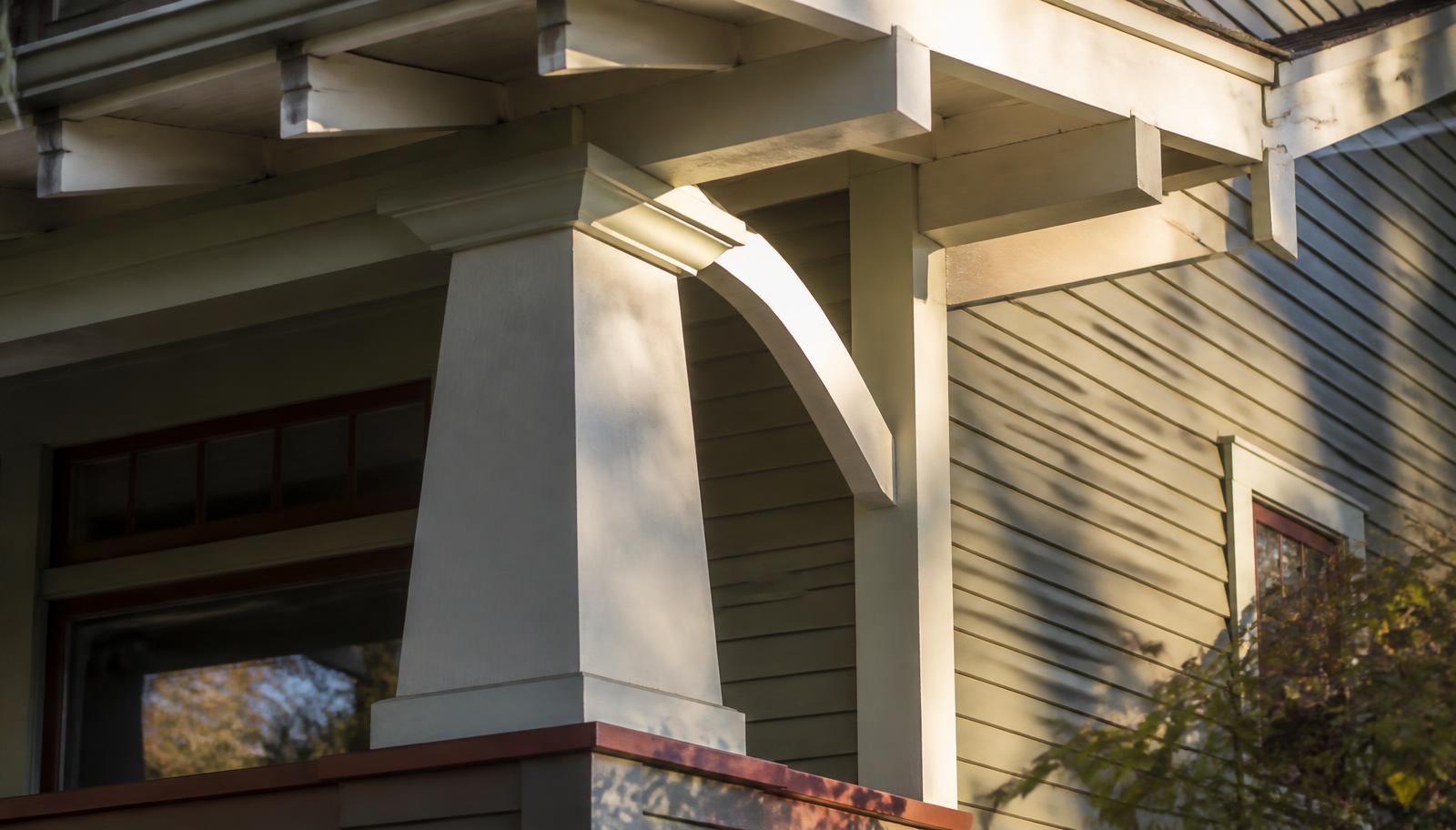
The critical threshold is whether the work constitutes a direct in-kind replacement or an alteration. If a homeowner replaces a rotted porch column with a replica matching the exact original material, height, width, and detailing, it is treated as minor maintenance or an administrative staff approval. If the column is replaced with a different material, such as fiberglass or synthetic composite, or with a modified profile, the project becomes an alteration requiring formal commission evaluation and approval.
Navigating the filing process before construction
Determining whether a specific property falls under local historic district review begins with checking Mecklenburg County POLARIS, which displays local historic zoning overlays. It is important to distinguish between properties listed on the National Register of Historic Places, which carries no local design review restrictions for private funding, and properties located inside Charlotte's municipal Local Historic District overlay, which mandates COA compliance.
Before finalizing plans or ordering materials, property owners should consult the commission's staff during the conceptual design phase. Staff can clarify whether a project qualifies as a Minor Work approved within days or a Major Work requiring a public evidentiary hearing with neighboring property notification. Preparing thorough architectural drawings, material specifications, and clear site plans early ensures the application moves through the review cycle without costly project delays.
Internal links
Read this next
The reference pages that carry this subject in more depth.
Recent journal entries
- September 21, 2026Fitting a Modern Kitchen into a 1920s Elizabeth HomeHow original floor plans dictate renovation strategy, structural changes, and trade sequencing in historic Elizabeth kitchens
- September 14, 2026Walking to Uptown Charlotte from the Elizabeth CoreA block-by-block account of pedestrian routes, streetcar connections, and terrain shifts between residential Elizabeth and center city Charlotte
- September 7, 2026Living Under the Willow Oak Canopy in ElizabethUnderstanding how mature street trees shape daily life, property maintenance, and structural additions across Elizabeth
- September 6, 2026Porch Details That Date an Elizabeth BungalowHow brick piers, battered columns, and decorative brackets reveal the construction decade of an Elizabeth home and direct its structural repair
Local representation
Applying this to a specific address?
This entry describes how things generally work in Elizabeth. Peters & Associates can tell you how it applies to one street, one block, and one house.
Charlotte Real Estate
Peters & Associatesyourleaderinluxury.comAdvertising disclosure. This is a paid or affiliated relationship: the firm above is affiliated with or compensates the publisher of this independent guide, and contacting it may result in a commercial engagement. It does not buy editorial placement. Full disclosure.
Questions & Answers
Frequently asked questions
Direct answers to what readers most often ask about this section of the guide. Each answer cites the primary source it rests on.
All Elizabeth questions →Do I need approval to paint my house in Elizabeth?
If you are painting previously painted wood siding or trim, you do not need a Certificate of Appropriateness or commission approval, regardless of the paint color you choose. However, painting previously unpainted historic masonry, brick foundations, or stone chimneys is regulated and generally not allowed.
Source: Charlotte Historic District Commission — design standards
Does the Charlotte Historic District Commission review interior renovations?
No. The commission has no authority over interior spaces. You may remodel kitchens, update bathrooms, move interior walls, and alter interior finishes without historic review. You will only need standard building and trade permits from Mecklenburg County Code Enforcement if the work involves structural, mechanical, or plumbing changes.
Source: Charlotte Historic District Commission — design standards
What is the difference between Minor Work and Major Work COAs?
Minor Work applications cover small changes such as fences, rear walkways, in-kind material replacements, and mechanical equipment screening, which commission staff can approve administratively. Major Work applications involve substantial alterations, additions, new construction, demolition, or prominent site changes, requiring a public hearing and vote before the full commission.
Source: NC Real Estate Commission
How do I check if my Elizabeth home is in the local historic district?
You can verify whether your property carries the local historic zoning overlay by looking up your parcel on Mecklenburg County POLARIS. Look under the zoning layer for the historic district designation, or consult the official district boundary maps on the Charlotte Planning, Design & Development website.
Our Sources
How this page was researched
This guide is independently written and verified against primary public records and official organizations. It is not affiliated with, endorsed by, or representing any neighborhood association, hospital, college, school district, or governing body.
Read our full citation methodology and editorial standards- 01POLARIS 3G property and parcel records
Mecklenburg County GIS
Parcel boundaries, lot sizes, ownership, and sale history.
- 02Local historic district design standards and review process
City of Charlotte Historic District Commission
Certificate of Appropriateness requirements for exterior work.
- 03Property tax and assessed value records
Mecklenburg County Assessor's Office
Assessed values, revaluation cycles, and tax rates.
Figures such as pricing, assessments, business hours, and school assignment change over time. Always confirm current details directly with the source before making a decision.
Topic Cluster
Living in Elizabeth
Dining, parks, schools, transit, and the daily rhythm of the neighborhood.
The Elizabeth Guide — Living in Elizabeth →Elizabeth Homes & Real Estate
Housing stock, price bands, and how this small historic market actually trades.
Continue →Elizabeth Neighborhood, Charlotte NC
The whole neighborhood on one page: place, history, architecture, district, market, and daily life.
Continue →Elizabeth Market Data
Price per square foot, inventory, and what drives value street to street.
Continue →Communities, Buildings & Enclaves
Every pocket, condo building, and infill community in and around Elizabeth.
Continue →Local Expertise
Work with the firms behind this guide
Last reviewed August 1, 2026. This guide keeps no contact form and no inbox — inquiries go directly to the firms below.