Journal · September 7, 2026
Living Under the Willow Oak Canopy in Elizabeth
Understanding how mature street trees shape daily life, property maintenance, and structural additions across Elizabeth
The architecture of the neighborhood canopy
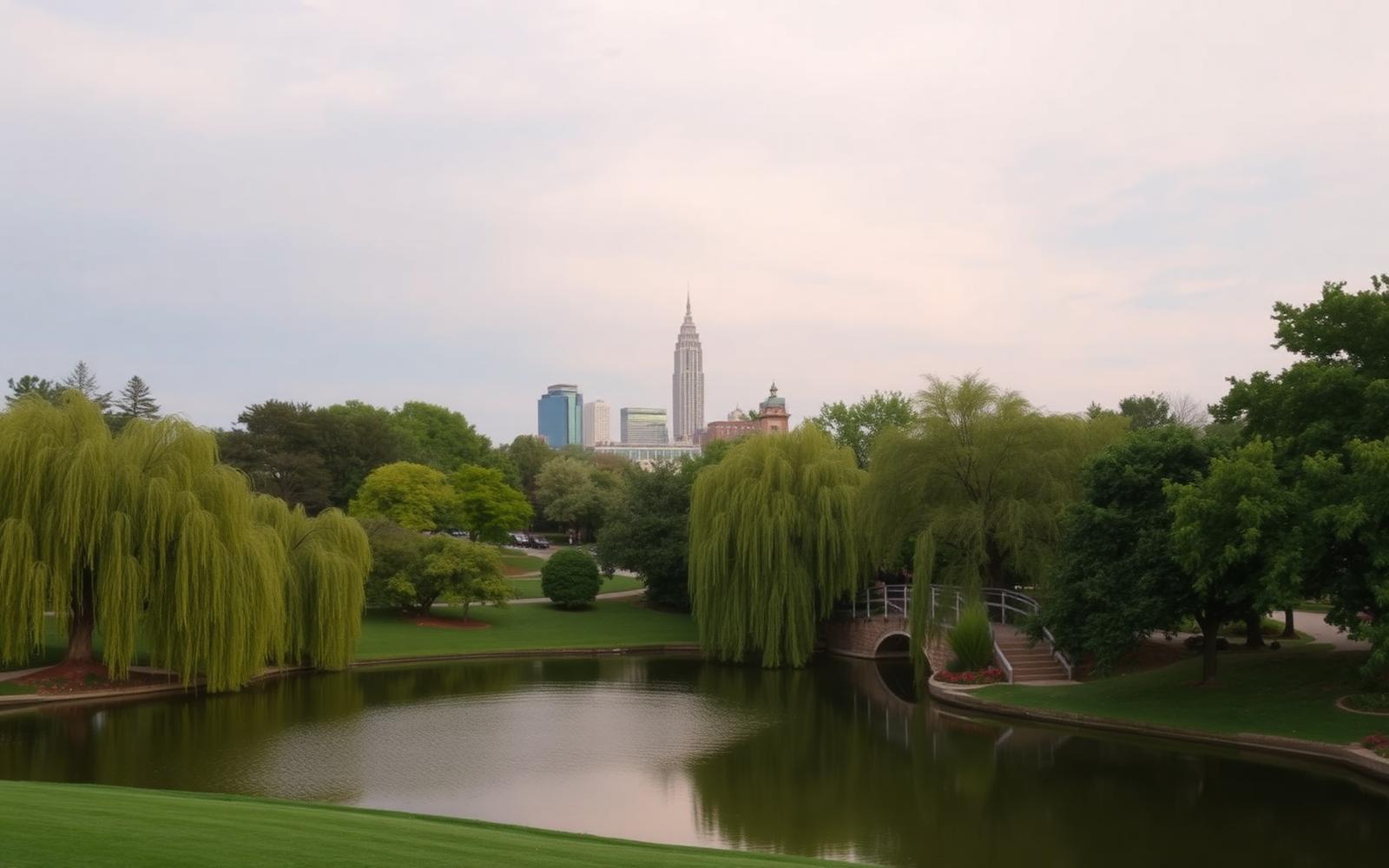
The streetscape of Elizabeth owes much of its visual identity and ambient cooling to the mature willow oaks lining its residential avenues. Planted extensively as the neighborhood developed along the streetcar line in the early twentieth century, these towering hardwoods create a continuous arch overhead. In high summer, this canopy lowers asphalt temperatures and reduces direct solar heat gain on the Craftsman bungalows and two-story Foursquares below. The resulting shade alters residential energy demands and creates the distinct, dappled light characteristic of the neighborhood.
This expansive foliage requires routine seasonal adaptation. By mid-autumn, the neighborhood experiences heavy leaf drop and steady acorn distribution, which quickly fills gutters and collects in roof valleys. Homeowners routinely schedule seasonal clearing and invest in oversized downspouts or gutter protection systems to prevent moisture backups along historic fascia boards. The sheer scale of the canopy also dampens street noise from Hawthorne Lane and nearby medical centers, reinforcing the quiet residential quality of Elizabeth interior blocks.
Determining tree ownership and maintenance boundaries
Property owners in Elizabeth frequently navigate the line between private stewardship and municipal authority regarding street trees. A significant portion of mature willow oaks stand within the municipal right-of-way between the sidewalk and the street curb. For trees situated in this strip, the City of Charlotte Landscape Management division handles pruning, deadwood removal, and risk assessments. Homeowners can verify exact property lines and right-of-way dimensions by examining Mecklenburg County POLARIS mapping data before undertaking any major landscape work.
When a tree stands entirely on private property, full responsibility for its maintenance, health, and eventual removal rests with the homeowner. Even so, removing a mature canopy tree within a designated historic area may require review and approval from the Charlotte Historic District Commission, depending on local designation boundaries. Pruning limbs that cross property lines follows North Carolina common law, permitting neighbors to trim overhanging branches up to the boundary line provided the trimming does not fatally compromise the tree.
Root systems, sidewalks, and driveways
Willow oaks are notorious for expansive, shallow root systems that extend far beyond their drip lines. Over decades, these lateral roots exert upward pressure on concrete sidewalks, stone retaining walls, and paved driveways throughout Elizabeth. Where roots heave public walkways, the city occasionally uses grinding techniques or asphalt patching to eliminate trip hazards, though full panel replacement requires careful root shaving to preserve tree stability.
On private property, homeowners often replace rigid concrete driveways with flexible or permeable alternatives. Ribbon driveways, gravel with stabilization grids, and dry-laid permeable pavers accommodate minor root growth without catastrophic cracking. These modular surfaces also allow water and oxygen to penetrate the soil below, nourishing the tree while preserving off-street parking. When historic stone curbing or walkway slate begins to shift, homeowners generally hire masonry specialists accustomed to leveling stones over active roots.
Designing additions and foundations around root plates
Planning home expansions in Elizabeth requires balancing building footprints against the critical root zones of established trees. Excavating for traditional continuous footings or full slab foundations can sever major support roots, triggering canopy decline or structural instability. Working with a dedicated renovation firm such as Peters Custom Homes allows property owners to explore alternative foundation techniques, such as helical piers and cantilevered grade beams, which span root zones without requiring extensive trenching.
Municipal tree protection ordinances establish specific calculation guidelines for critical root zones during permitted construction. Contractors must erect rigid tree protection fencing at designated radii and establish root aeration systems if work encroaches on undisturbed ground. Incorporating these measures early in the architectural planning stage prevents costly delays during municipal plan reviews and protects the long-term value of the neighborhood canopy.
Seasonal maintenance and tree health preservation
Preserving a centenarian willow oak requires periodic evaluation by an ISA-certified arborist familiar with Piedmont soil conditions and urban stress factors. In Elizabeth, compacted clay soils and heavy foot traffic limit soil aeration around older root plates. Arborists frequently recommend vertical mulching or air-spade soil decompression to introduce compost and mycorrhizae into root zones without disturbing established turf.
Canopy care involves selective deadwooding and weight reduction rather than indiscriminate topping, which invites decay and weak regrowth. Regular crown inspections identify structural defects, hollow limbs, or signs of heart rot before high winds or summer thunderstorms cause branch failures. Homeowners also monitor for seasonal pests, such as scale insects or historical cankerworm infestations, taking advantage of banded tree trunks and targeted biological treatments when population thresholds warrant intervention.
Real estate valuation and tree stewardship
Mature trees contribute significantly to the aesthetic character and market perception of Elizabeth real estate. Prospective purchasers often weigh the considerable visual appeal and cooling benefits of a shaded lot against the ongoing expenses of arborist care, insurance coverage, and root-related hardscape maintenance. During contract due diligence, hiring an independent arborist alongside standard home inspectors provides an accurate assessment of canopy health and impending liability.
Engaging an experienced neighborhood representative like Peters & Associates ensures buyers fully understand how historic district guidelines, tree preservation requirements, and municipal easement rights intersect on a specific parcel. Understanding these property boundaries and maintenance obligations before closing allows buyers to budget appropriately for tree stewardship and enjoy the enduring benefits of living beneath Elizabeth's historic canopy.
Internal links
Read this next
The reference pages that carry this subject in more depth.
Recent journal entries
- September 21, 2026Fitting a Modern Kitchen into a 1920s Elizabeth HomeHow original floor plans dictate renovation strategy, structural changes, and trade sequencing in historic Elizabeth kitchens
- September 14, 2026Walking to Uptown Charlotte from the Elizabeth CoreA block-by-block account of pedestrian routes, streetcar connections, and terrain shifts between residential Elizabeth and center city Charlotte
- September 6, 2026Porch Details That Date an Elizabeth BungalowHow brick piers, battered columns, and decorative brackets reveal the construction decade of an Elizabeth home and direct its structural repair
Local representation
Applying this to a specific address?
This entry describes how things generally work in Elizabeth. Peters & Associates can tell you how it applies to one street, one block, and one house.
Charlotte Real Estate
Peters & Associatesyourleaderinluxury.comAdvertising disclosure. This is a paid or affiliated relationship: the firm above is affiliated with or compensates the publisher of this independent guide, and contacting it may result in a commercial engagement. It does not buy editorial placement. Full disclosure.
Questions & Answers
Frequently asked questions
Direct answers to what readers most often ask about this section of the guide. Each answer cites the primary source it rests on.
All Elizabeth questions →Who is responsible for maintaining the willow oaks between the sidewalk and street in Elizabeth?
Trees located in the public planting strip between the sidewalk and the street curb generally fall under the jurisdiction of the City of Charlotte Landscape Management division. The city handles routine safety pruning, deadwood removal, and canopy health monitoring for these right-of-way trees. Homeowners maintain trees situated behind the public sidewalk on private property.
Source: City of Charlotte tree canopy and tree ordinance program
Can I remove a mature willow oak on my Elizabeth property?
If the tree is on private property outside a regulated historic district, the homeowner may remove it, though city tree canopy ordinances may require replanting or mitigation for certain parcel sizes. If the property falls within the Charlotte Historic District Commission boundaries or the tree sits within the public right-of-way, formal municipal approval and permits are required before any removal can occur.
Source: Charlotte Historic District Commission — design standards
How do tree roots affect home additions and building permits in Elizabeth?
Building permits require compliance with Charlotte tree protection regulations. When an addition encroaches upon the critical root zone of a protected tree, applicants must submit a tree protection plan. Builders often utilize specialized foundation designs, such as point piers and grade beams, to avoid severing structural roots during excavation.
Source: City of Charlotte / Mecklenburg County Code Enforcement permitting
How can I tell where my Elizabeth property line ends and the city tree easement begins?
Homeowners can consult Mecklenburg County POLARIS mapping data to view property boundary overlays, right-of-way widths, and recorded plats. A professional property boundary survey provides the definitive legal line between private deeded land and the municipal street easement.
Source: City of Charlotte tree canopy and tree ordinance program
Our Sources
How this page was researched
This guide is independently written and verified against primary public records and official organizations. It is not affiliated with, endorsed by, or representing any neighborhood association, hospital, college, school district, or governing body.
Read our full citation methodology and editorial standards- 01POLARIS 3G property and parcel records
Mecklenburg County GIS
Parcel boundaries, lot sizes, ownership, and sale history.
- 02Local historic district design standards and review process
City of Charlotte Historic District Commission
Certificate of Appropriateness requirements for exterior work.
- 03Property tax and assessed value records
Mecklenburg County Assessor's Office
Assessed values, revaluation cycles, and tax rates.
Figures such as pricing, assessments, business hours, and school assignment change over time. Always confirm current details directly with the source before making a decision.
Topic Cluster
Living in Elizabeth
Dining, parks, schools, transit, and the daily rhythm of the neighborhood.
The Elizabeth Guide — Living in Elizabeth →Elizabeth Homes & Real Estate
Housing stock, price bands, and how this small historic market actually trades.
Continue →Elizabeth Neighborhood, Charlotte NC
The whole neighborhood on one page: place, history, architecture, district, market, and daily life.
Continue →Elizabeth Market Data
Price per square foot, inventory, and what drives value street to street.
Continue →Communities, Buildings & Enclaves
Every pocket, condo building, and infill community in and around Elizabeth.
Continue →Local Expertise
Work with the firms behind this guide
Last reviewed August 1, 2026. This guide keeps no contact form and no inbox — inquiries go directly to the firms below.