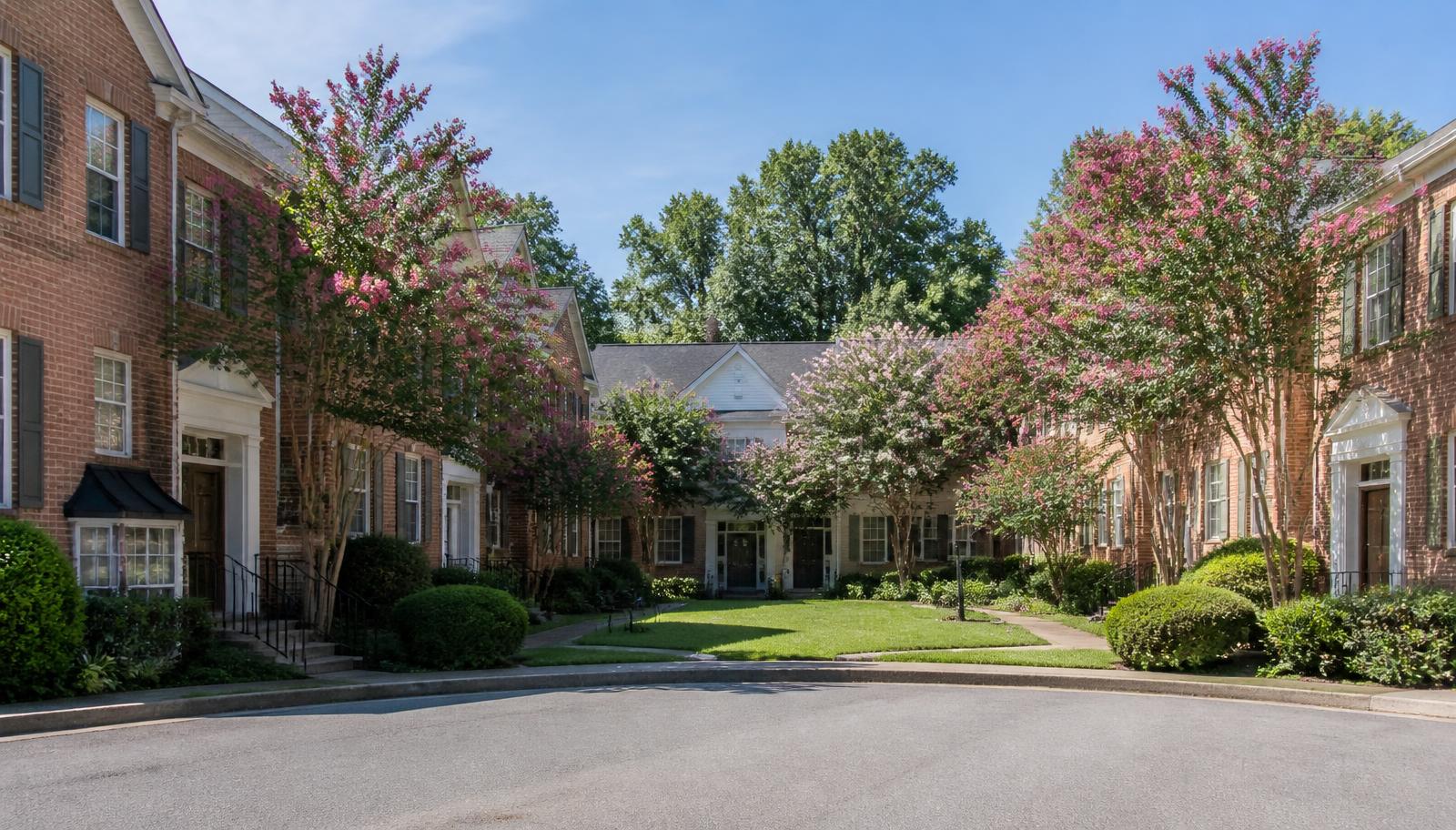
Historic pocket
Independence Park Blocks
The residential streets immediately surrounding Independence Park, among the most sought-after and highest-priced blocks in the neighborhood.
The residential streets immediately surrounding Independence Park, among the most sought-after and highest-priced blocks in the neighborhood.
About Independence Park Blocks
The blocks framing Independence Park — Charlotte's first public park, dedicated in 1904 — are widely considered the most desirable in Elizabeth. Houses face the park's mature trees, walking paths, and the historic amphitheater and Sunset Terrace playground, and many were built by the neighborhood's earliest and more prominent original owners.
Architecture leans toward larger Colonial Revival and American Foursquare houses on wider lots than the district average, though bungalows appear here too, particularly on the park's eastern side. Original details — leaded glass, wraparound porches, slate roofs on a handful of houses — survive at a higher rate than on some interior streets, likely reflecting sustained demand and investment over decades.
Living on these blocks means the park functions as an extension of the yard: morning walks, weekend soccer on the open lawn, and access to the park's tennis courts and playground without a drive. That amenity carries a price premium that has held up through multiple market cycles, and turnover here tends to be lower than the neighborhood average as owners stay for decades.
The premium on these blocks is easy to describe and hard to replicate: a large, mature public park functioning as extended front yard, with the amenity permanently protected by public ownership. That last part is what the market is actually pricing. A view of a park cannot be built out, subdivided or replaced with something larger, which makes it one of the few advantages in a neighbourhood that no future development decision can erode. Scarce, permanent and undevelopable is an unusual combination, and it explains why these addresses have held their relative position through several market cycles.
The houses reflect that history of demand. Sustained value has meant sustained maintenance capital, which is why original detail survives here at a higher rate than on blocks that went through leaner decades — porches unenclosed, windows repaired rather than replaced, roof lines unaltered. It also means the renovation work a buyer inherits is more often competent and permitted than improvised, though that is a tendency and not a guarantee. Ask for permit history and Certificate of Appropriateness records on any specific house rather than assuming the block's reputation covers it.
The costs are real and worth naming. Park-adjacent living means park activity: youth sports on weekend mornings, events with amplified sound, tennis and playground noise through long evenings, and periodic parking pressure from visitors who are not your neighbours. Turnover is low, so inventory is thin and competition for it is sharp, which tends to compress a buyer's diligence window at exactly the moment a century-old house deserves more of it. Buyers who intend to compete here should have inspection and financing arranged in advance rather than assembled after an accepted offer.
What defines it
- Direct frontage on or near Independence Park
- Larger lots and houses than the district average
- High rate of retained original architectural detail
- Historically low turnover and strong resale performance
Housing summary
| Type | Historic pocket |
|---|---|
| Building era | 1907–1925 |
| Scale | roughly 150 homes |
| Typical range | $550,000–$1.2 million |
| Principal streets | East 8th Street, Hawthorne Lane, Louise Avenue |
Ranges are general characterizations rather than appraisals, and turnover in a market this small can move them quickly. Verify current figures against Canopy MLS and parcel records on Mecklenburg County POLARIS before relying on them.
Block by block
Streets in and around Independence Park Blocks
Character, building era, and daily conditions street by street.
Keep exploring
Other communities and enclaves
Local representation
Looking at Independence Park Blocks?
Condition, review requirements, and street-level differences drive value here more than any neighborhood average. Peters & Associates works Elizabeth specifically and can walk a property with you before you write an offer.
Charlotte Real Estate
Peters & Associatesyourleaderinluxury.comAdvertising disclosure. This is a paid or affiliated relationship: the firm above is affiliated with or compensates the publisher of this independent guide, and contacting it may result in a commercial engagement. It does not buy editorial placement. Full disclosure.
Questions & Answers
Frequently asked questions
Direct answers to what readers most often ask about this section of the guide. Each answer cites the primary source it rests on.
All Elizabeth questions →Why is this pocket priced higher than the rest of Elizabeth?
Direct park proximity, larger average lot and house sizes, and a long history of sustained maintenance and investment are the most commonly cited factors, though buyers should verify current comparable sales rather than relying on general reputation.
Is Independence Park itself part of the historic district?
The park is a separate public asset managed by Mecklenburg County Park and Recreation, distinct from the privately owned houses in the adjoining historic district, though both share the same founding era.
Is park noise a genuine drawback on these blocks?
For some households, yes. Organised sports, events and playground use generate real sound during predictable windows. Visit on a Saturday morning and on a weekday evening before deciding — those two visits will tell you more than any description.
Why is inventory here so limited?
Owners stay. Turnover on park-adjacent blocks runs below the neighbourhood average, so few houses come to market in a given year and each draws concentrated interest. Prepare financing and inspection resources before you begin looking rather than after.
Source: City of Charlotte / Mecklenburg County Code Enforcement permitting
Our Sources
How this page was researched
This guide is independently written and verified against primary public records and official organizations. It is not affiliated with, endorsed by, or representing any neighborhood association, hospital, college, school district, or governing body.
Read our full citation methodology and editorial standards- 01POLARIS 3G property and parcel records
Mecklenburg County GIS
Parcel boundaries, lot sizes, ownership, and sale history.
- 02Charlotte-region housing market reports
Canopy Realtor® Association / Canopy MLS
Regional price, inventory, and days-on-market trends.
- 03Survey and designation records for Charlotte's historic neighborhoods
Charlotte-Mecklenburg Historic Landmarks Commission
Historic designation, survey history, and landmark property records.
- 04Local historic district design standards and review process
City of Charlotte Historic District Commission
Certificate of Appropriateness requirements for exterior work.
Figures such as pricing, assessments, business hours, and school assignment change over time. Always confirm current details directly with the source before making a decision.
Topic Cluster
Elizabeth Homes & Market
Housing stock, price bands, enclaves, and street-level value.
The Elizabeth Guide — Elizabeth Homes & Market →Elizabeth Homes & Real Estate
Housing stock, price bands, and how this small historic market actually trades.
Continue →Elizabeth Neighborhood, Charlotte NC
The whole neighborhood on one page: place, history, architecture, district, market, and daily life.
Continue →Elizabeth Market Data
Price per square foot, inventory, and what drives value street to street.
Continue →Communities, Buildings & Enclaves
Every pocket, condo building, and infill community in and around Elizabeth.
Continue →Local Expertise
Work with the firms behind this guide
Last reviewed August 1, 2026. This guide keeps no contact form and no inbox — inquiries go directly to the firms below.