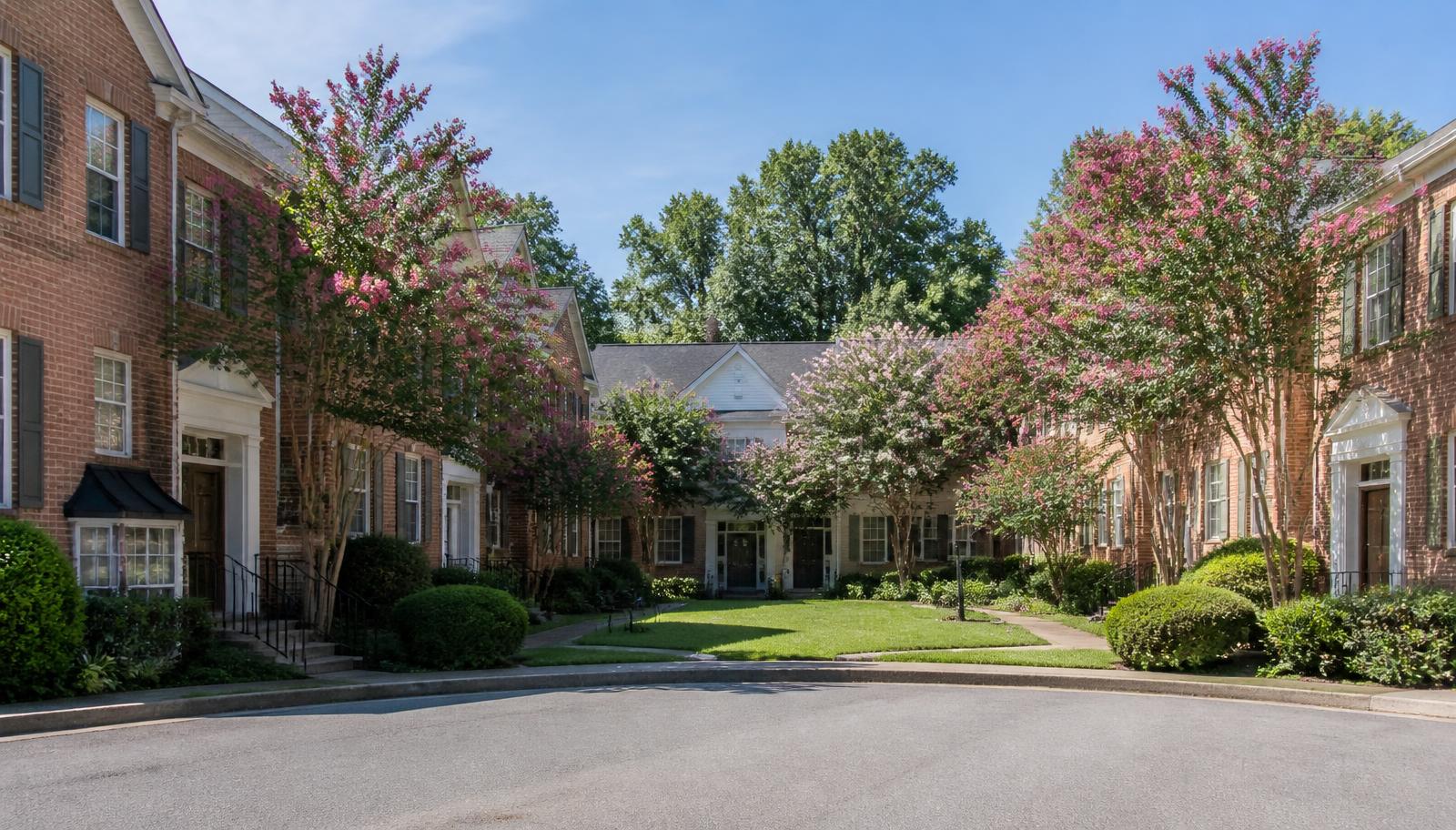
Historic pocket
East 8th Street Corridor
One of the district's widest and most consistently canopied streets, running from Hawthorne Lane to Louise Avenue past Independence Park.
One of the district's widest and most consistently canopied streets, running from Hawthorne Lane to Louise Avenue past Independence Park.
About East 8th Street Corridor
East 8th Street is one of Elizabeth's defining thoroughfares, a wide, tree-lined residential street connecting the historic district's western edge to Independence Park. Houses here tend toward the larger end of the neighborhood's scale, with several substantial Colonial Revival homes built for prominent early Charlotte families.
The willow oak canopy over East 8th is among the fullest in the neighborhood, having been planted and maintained since the early twentieth century, and the street is frequently used in local photography and preservation materials as representative of the district's character.
Traffic is light and mostly local, and the street's width allows on-street parking on both sides without the crowding found on some narrower blocks, making it a popular choice for buyers weighing walkability against livability.
Street width is an underrated variable in a hundred-year-old neighbourhood, and East 8th has it. The extra pavement means two cars can park along both curbs while traffic still passes without negotiation — a small thing that turns out to govern daily life, because on the district's narrowest blocks a single contractor van or a dinner party reorganises everyone's evening. Width also gave the willow oaks room to reach full form on both sides, which is why the canopy here closes overhead in a way that photographs well and, more practically, drops summer surface temperatures measurably.
The houses match the street's scale. This is where the district's larger Colonial Revival and Foursquare examples cluster, on lots that gave builders room for symmetrical facades and deeper front setbacks. The corollary is cost: more roof, more siding, more window openings and more square footage to heat and cool than a bungalow two blocks away. A buyer comparing a large Colonial Revival here with a bungalow elsewhere in the district should compare operating and maintenance cost as carefully as purchase price, because the gap between them is wider than the price difference suggests.
The canopy that defines the street is also a standing obligation. Mature willow oaks are magnificent and finite; they drop limbs in storms, lift sidewalks and driveways, and eventually require assessment and sometimes removal. Trees in the public right of way are the city's responsibility and removal or major pruning of protected trees follows city process rather than owner preference. Anyone buying under this canopy should understand which trees are theirs, what the city's tree ordinance requires, and what a mature oak's decline actually costs to manage.
What defines it
- Full mature willow oak canopy
- Wider street width than most of the district
- Direct route to Independence Park
- Concentration of larger Colonial Revival homes
Housing summary
| Type | Historic pocket |
|---|---|
| Building era | 1908–1928 |
| Scale | roughly 70 homes |
| Typical range | $500,000–$1 million |
| Principal streets | East 8th Street, Hawthorne Lane, Louise Avenue |
Ranges are general characterizations rather than appraisals, and turnover in a market this small can move them quickly. Verify current figures against Canopy MLS and parcel records on Mecklenburg County POLARIS before relying on them.
Block by block
Streets in and around East 8th Street Corridor
Character, building era, and daily conditions street by street.
Keep exploring
Other communities and enclaves
Local representation
Looking at East 8th Street Corridor?
Condition, review requirements, and street-level differences drive value here more than any neighborhood average. Peters & Associates works Elizabeth specifically and can walk a property with you before you write an offer.
Charlotte Real Estate
Peters & Associatesyourleaderinluxury.comAdvertising disclosure. This is a paid or affiliated relationship: the firm above is affiliated with or compensates the publisher of this independent guide, and contacting it may result in a commercial engagement. It does not buy editorial placement. Full disclosure.
Questions & Answers
Frequently asked questions
Direct answers to what readers most often ask about this section of the guide. Each answer cites the primary source it rests on.
All Elizabeth questions →Is East 8th Street part of the local historic district?
Yes, it runs through the core of the locally designated Elizabeth Historic District and is subject to Certificate of Appropriateness review for exterior work.
Source: Charlotte Historic District Commission — design standards
Is parking difficult on East 8th Street?
Generally less difficult than on narrower interior streets, given the street's above-average width, though weekend park traffic can add congestion near Independence Park.
Source: City of Charlotte tree canopy and tree ordinance program
Who is responsible for the large street trees?
Trees in the public right of way are generally the city's responsibility, and Charlotte's tree ordinance governs removal and major pruning of protected trees on private property as well. Establish where the right of way line falls on a specific parcel before assuming a tree is yours to manage.
Are the larger houses here more expensive to run?
Materially so. More exterior envelope, more roof area, more window openings and more conditioned volume all raise maintenance and utility cost relative to a bungalow. Ask for twelve months of utility history and a roof age before comparing two houses on price alone.
Source: Charlotte Mecklenburg Library — Robinson-Spangler Carolina Room
Our Sources
How this page was researched
This guide is independently written and verified against primary public records and official organizations. It is not affiliated with, endorsed by, or representing any neighborhood association, hospital, college, school district, or governing body.
Read our full citation methodology and editorial standards- 01POLARIS 3G property and parcel records
Mecklenburg County GIS
Parcel boundaries, lot sizes, ownership, and sale history.
- 02Charlotte-region housing market reports
Canopy Realtor® Association / Canopy MLS
Regional price, inventory, and days-on-market trends.
- 03Survey and designation records for Charlotte's historic neighborhoods
Charlotte-Mecklenburg Historic Landmarks Commission
Historic designation, survey history, and landmark property records.
- 04Local historic district design standards and review process
City of Charlotte Historic District Commission
Certificate of Appropriateness requirements for exterior work.
Figures such as pricing, assessments, business hours, and school assignment change over time. Always confirm current details directly with the source before making a decision.
Topic Cluster
Elizabeth Homes & Market
Housing stock, price bands, enclaves, and street-level value.
The Elizabeth Guide — Elizabeth Homes & Market →Elizabeth Homes & Real Estate
Housing stock, price bands, and how this small historic market actually trades.
Continue →Elizabeth Neighborhood, Charlotte NC
The whole neighborhood on one page: place, history, architecture, district, market, and daily life.
Continue →Elizabeth Market Data
Price per square foot, inventory, and what drives value street to street.
Continue →Communities, Buildings & Enclaves
Every pocket, condo building, and infill community in and around Elizabeth.
Continue →Local Expertise
Work with the firms behind this guide
Last reviewed August 1, 2026. This guide keeps no contact form and no inbox — inquiries go directly to the firms below.