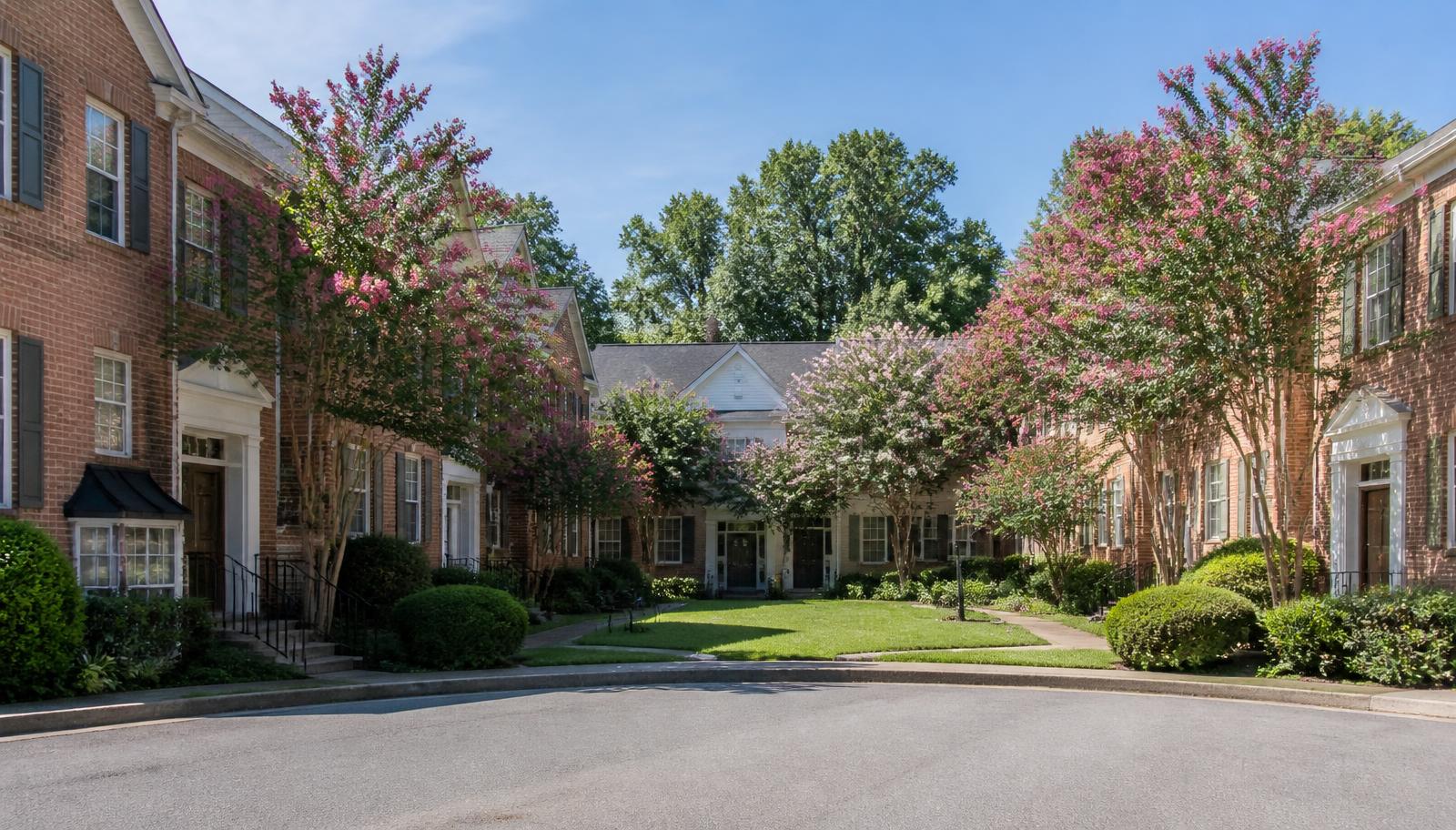
Historic pocket
Clement Avenue Pocket
A compact, tightly knit block of bungalows just south of East 7th Street, known for a strong sense of block community.
A compact, tightly knit block of bungalows just south of East 7th Street, known for a strong sense of block community.
About Clement Avenue Pocket
Clement Avenue is a short, quiet residential street south of East 7th, lined mostly with one-and-a-half-story bungalows on modest lots. Its scale is intimate compared to the district's wider avenues, and the block has a reputation among longtime residents for an active, informal social network of neighbors.
Renovation activity here has been steady rather than dramatic: additions tend to go up and back rather than out, preserving the original footprint visible from the street, consistent with the Historic District Commission's guidance for the area.
Its proximity to East 7th Street's small commercial cluster means residents can walk to a coffee shop or restaurant in a few minutes, one of the more walkable micro-pockets within the district.
Short blocks behave differently from long ones, socially and practically. On a street this length residents recognise each other's cars, notice an unfamiliar one, and end up in more incidental conversation simply because there is less distance between front porches. Long-time residents describe an informal network rather than an organised association — the sort of arrangement where a neighbour holds a delivery or checks a house during a trip without any of it being formalised. That texture is real, and it is the main reason people who buy on a street like this tend to stay.
The same compactness constrains what can be built. Modest lots with limited side yard leave little room to expand outward, which pushes renovation upward and to the rear — a dormered second storey, a rear addition set behind the original ridge line. That direction happens also to align with how the Historic District Commission's guidance treats visible massing, so the physical constraint and the review constraint point the same way. Buyers planning to add space should have a designer test the concept against both the lot's setbacks and the district's guidance before purchase, not after.
Walkability here is the genuine article rather than a score on a listing. The small commercial cluster along East 7th is close enough that residents walk to coffee or dinner without weighing it as a decision, which is a different experience from being a ten-minute walk away. The tradeoff is proximity to that same activity: cars looking for parking on a weekend evening, and some noise carrying on warm nights when windows are open.
What defines it
- Intimate, narrow residential block
- Strong informal neighbor network
- Short walk to East 7th Street businesses
- Additions typically built up and back to preserve street-facing form
Housing summary
| Type | Historic pocket |
|---|---|
| Building era | 1910–1925 |
| Scale | roughly 40 homes |
| Typical range | $475,000–$850,000 |
| Principal streets | Clement Avenue, East 7th Street |
Ranges are general characterizations rather than appraisals, and turnover in a market this small can move them quickly. Verify current figures against Canopy MLS and parcel records on Mecklenburg County POLARIS before relying on them.
Block by block
Streets in and around Clement Avenue Pocket
Character, building era, and daily conditions street by street.
Keep exploring
Other communities and enclaves
Local representation
Looking at Clement Avenue Pocket?
Condition, review requirements, and street-level differences drive value here more than any neighborhood average. Peters & Associates works Elizabeth specifically and can walk a property with you before you write an offer.
Charlotte Real Estate
Peters & Associatesyourleaderinluxury.comAdvertising disclosure. This is a paid or affiliated relationship: the firm above is affiliated with or compensates the publisher of this independent guide, and contacting it may result in a commercial engagement. It does not buy editorial placement. Full disclosure.
Questions & Answers
Frequently asked questions
Direct answers to what readers most often ask about this section of the guide. Each answer cites the primary source it rests on.
All Elizabeth questions →Are lots on Clement Avenue large?
No, lots here are among the more compact in the district, generally under a quarter acre.
Is there commercial activity on Clement Avenue itself?
The street is entirely residential; commercial activity is concentrated a block away on East 7th Street.
Source: City of Charlotte tree canopy and tree ordinance program
Can a house on a small lot here be expanded?
Usually, but upward and to the rear rather than outward. Limited side yards restrict lateral additions, and the Historic District Commission's guidance discourages changes that alter street-facing massing. Have a designer test setbacks and the guidance together before you commit to a purchase that depends on an addition.
Source: Charlotte Historic District Commission — design standards
Does the nearby commercial cluster affect parking?
On weekend evenings it can. Walk the block on a Friday or Saturday night and see how the curb looks before assuming an off-street space or two will cover your household.
Source: City of Charlotte tree canopy and tree ordinance program
Our Sources
How this page was researched
This guide is independently written and verified against primary public records and official organizations. It is not affiliated with, endorsed by, or representing any neighborhood association, hospital, college, school district, or governing body.
Read our full citation methodology and editorial standards- 01POLARIS 3G property and parcel records
Mecklenburg County GIS
Parcel boundaries, lot sizes, ownership, and sale history.
- 02Charlotte-region housing market reports
Canopy Realtor® Association / Canopy MLS
Regional price, inventory, and days-on-market trends.
- 03Survey and designation records for Charlotte's historic neighborhoods
Charlotte-Mecklenburg Historic Landmarks Commission
Historic designation, survey history, and landmark property records.
- 04Local historic district design standards and review process
City of Charlotte Historic District Commission
Certificate of Appropriateness requirements for exterior work.
Figures such as pricing, assessments, business hours, and school assignment change over time. Always confirm current details directly with the source before making a decision.
Topic Cluster
Elizabeth Homes & Market
Housing stock, price bands, enclaves, and street-level value.
The Elizabeth Guide — Elizabeth Homes & Market →Elizabeth Homes & Real Estate
Housing stock, price bands, and how this small historic market actually trades.
Continue →Elizabeth Neighborhood, Charlotte NC
The whole neighborhood on one page: place, history, architecture, district, market, and daily life.
Continue →Elizabeth Market Data
Price per square foot, inventory, and what drives value street to street.
Continue →Communities, Buildings & Enclaves
Every pocket, condo building, and infill community in and around Elizabeth.
Continue →Local Expertise
Work with the firms behind this guide
Last reviewed August 1, 2026. This guide keeps no contact form and no inbox — inquiries go directly to the firms below.