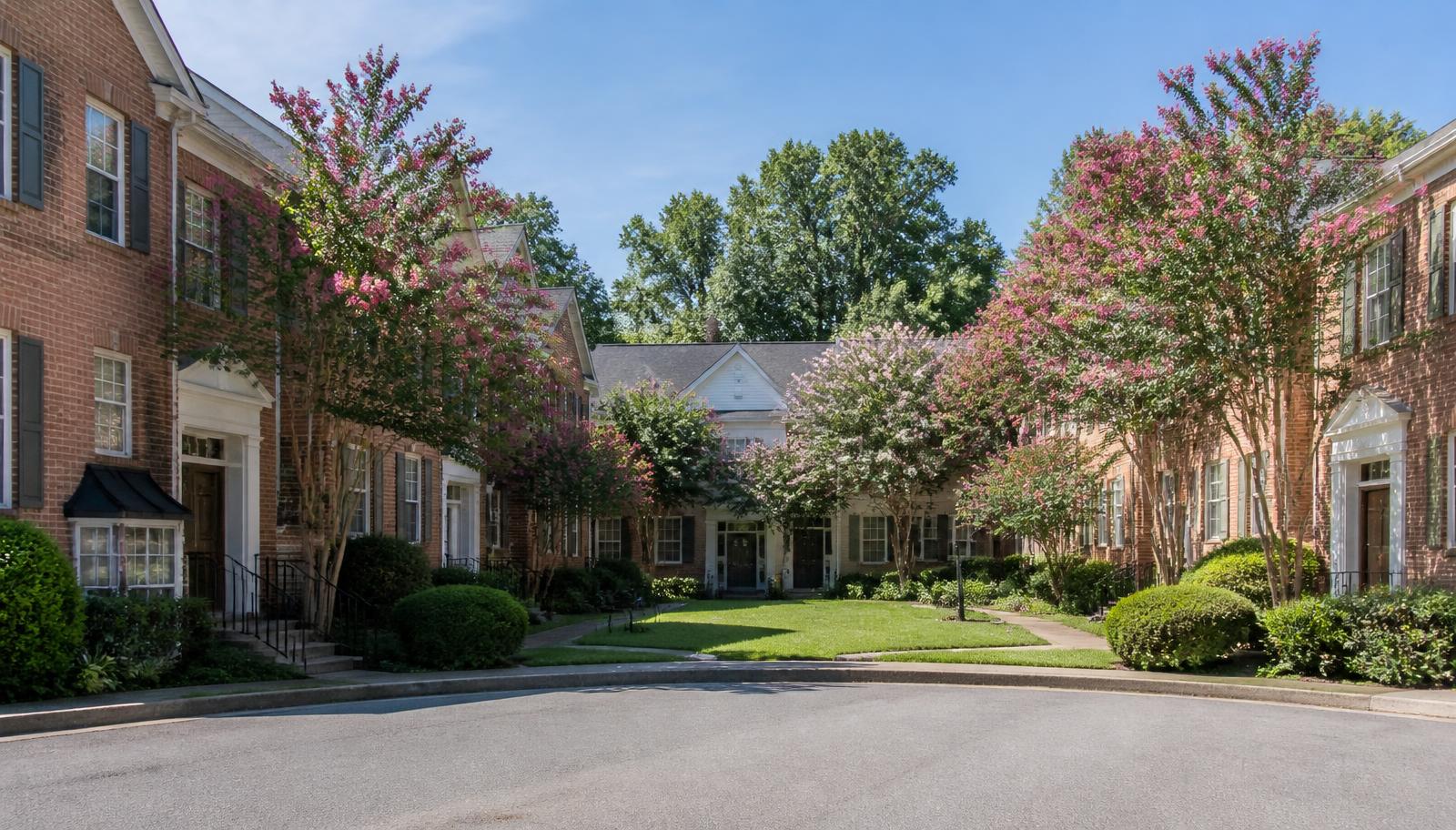
Adjacent neighborhood
Chantilly
The neighborhood directly east of Elizabeth, developed slightly later with a mix of bungalows, ranches, and larger brick homes along a hillier, more wooded street pattern.
The neighborhood directly east of Elizabeth, developed slightly later with a mix of bungalows, ranches, and larger brick homes along a hillier, more wooded street pattern.
About Chantilly
Chantilly developed from the 1920s through the 1950s just east of Elizabeth, following Charlotte's outward growth along Central Avenue and Wendover Road. Its street pattern is hillier and less rigidly gridded than Elizabeth's, producing more varied lot shapes and setbacks.
Housing spans a wider architectural range than Elizabeth, from 1920s bungalows near the Elizabeth boundary to 1950s brick ranches further east, giving buyers more price and style variety within a single neighborhood, though without the concentrated historic district design review that governs Elizabeth's core.
For someone priced out of Elizabeth's historic district, Chantilly is a common next stop: similar canopy and walkability on its western blocks, generally lower prices, and easy access to both Elizabeth's amenities and the Central Avenue corridor's international restaurant scene.
Chantilly's terrain is the first thing that separates it from Elizabeth, and it has consequences beyond appearance. The land rolls, so streets bend to follow it, lots take irregular shapes, and driveways and yards sit at grades Elizabeth's flatter grid never produced. That topography means water moves, and water movement is the single most useful thing to investigate about any house here: where the lot sheds during a hard rain, how the crawlspace or basement handles it, whether downspouts and grading actually carry runoff away from the foundation or toward it.
The housing stock spans three decades of changing American taste, and each era carries a different renovation profile. The 1920s bungalows near the Elizabeth line behave like Elizabeth's houses: knob-and-tube or early replacement wiring, plaster, original window sash worth repairing. The 1950s brick ranches further east are a different proposition entirely — slab or crawlspace on one level, easier to reconfigure, simpler mechanically, and generally cheaper per square foot to modernise. A buyer's budget should follow the era, not the neighbourhood name.
Without a district-wide design review overlay, Chantilly's streetscape evolves parcel by parcel. That has allowed larger additions and occasional replacements that would not clear review in Elizabeth's core, and it means the visual consistency varies considerably by block. The offsetting advantages are concrete: lower entry prices for comparable space, quick access to the Central Avenue corridor's genuinely excellent and internationally varied restaurants, and renovation freedom for an owner who wants to change a house substantially without a public hearing.
What defines it
- Hillier terrain and less rigid street grid than Elizabeth
- Wider range of architectural eras, 1920s to 1950s
- No comprehensive local historic district overlay
- Popular alternative for buyers priced out of Elizabeth's core
Housing summary
| Type | Adjacent neighborhood |
|---|---|
| Building era | 1920s–1950s |
| Scale | roughly 700 homes |
| Typical range | $400,000–$800,000 |
| Principal streets | Central Avenue, Wendover Road, Sharon Amity Road |
Ranges are general characterizations rather than appraisals, and turnover in a market this small can move them quickly. Verify current figures against Canopy MLS and parcel records on Mecklenburg County POLARIS before relying on them.
Block by block
Streets in and around Chantilly
Character, building era, and daily conditions street by street.
Keep exploring
Other communities and enclaves
Local representation
Looking at Chantilly?
Condition, review requirements, and street-level differences drive value here more than any neighborhood average. Peters & Associates works Elizabeth specifically and can walk a property with you before you write an offer.
Charlotte Real Estate
Peters & Associatesyourleaderinluxury.comAdvertising disclosure. This is a paid or affiliated relationship: the firm above is affiliated with or compensates the publisher of this independent guide, and contacting it may result in a commercial engagement. It does not buy editorial placement. Full disclosure.
Questions & Answers
Frequently asked questions
Direct answers to what readers most often ask about this section of the guide. Each answer cites the primary source it rests on.
All Elizabeth questions →Is Chantilly considered part of Elizabeth?
No, it is a distinct, separately named Charlotte neighborhood, though the two share a border and a similar mid-century residential character on their adjoining blocks.
Source: City of Charlotte
Does Chantilly have the same tree canopy as Elizabeth?
Its western blocks, closest to Elizabeth, have a comparable mature canopy; canopy coverage thins somewhat on blocks built later, further east.
Source: City of Charlotte tree canopy and tree ordinance program
What should I inspect first in a Chantilly house?
Drainage and the grade around the foundation, given the rolling terrain. After that, match your inspection focus to the construction era — wiring, plaster and window sash in the 1920s houses; slab condition, ductwork and original galvanised or cast-iron plumbing in the 1950s ranches.
Source: City of Charlotte / Mecklenburg County Code Enforcement permitting
Can I add on to a house in Chantilly more freely than in Elizabeth?
Generally yes, because most of Chantilly lacks Elizabeth's Certificate of Appropriateness requirement, so exterior changes follow ordinary zoning and permitting. Verify overlays for the specific parcel with the City of Charlotte before you design anything.
Source: Charlotte Historic District Commission — design standards
Our Sources
How this page was researched
This guide is independently written and verified against primary public records and official organizations. It is not affiliated with, endorsed by, or representing any neighborhood association, hospital, college, school district, or governing body.
Read our full citation methodology and editorial standards- 01POLARIS 3G property and parcel records
Mecklenburg County GIS
Parcel boundaries, lot sizes, ownership, and sale history.
- 02Charlotte-region housing market reports
Canopy Realtor® Association / Canopy MLS
Regional price, inventory, and days-on-market trends.
- 03Survey and designation records for Charlotte's historic neighborhoods
Charlotte-Mecklenburg Historic Landmarks Commission
Historic designation, survey history, and landmark property records.
- 04Local historic district design standards and review process
City of Charlotte Historic District Commission
Certificate of Appropriateness requirements for exterior work.
Figures such as pricing, assessments, business hours, and school assignment change over time. Always confirm current details directly with the source before making a decision.
Topic Cluster
Elizabeth Homes & Market
Housing stock, price bands, enclaves, and street-level value.
The Elizabeth Guide — Elizabeth Homes & Market →Elizabeth Homes & Real Estate
Housing stock, price bands, and how this small historic market actually trades.
Continue →Elizabeth Neighborhood, Charlotte NC
The whole neighborhood on one page: place, history, architecture, district, market, and daily life.
Continue →Elizabeth Market Data
Price per square foot, inventory, and what drives value street to street.
Continue →Communities, Buildings & Enclaves
Every pocket, condo building, and infill community in and around Elizabeth.
Continue →Local Expertise
Work with the firms behind this guide
Last reviewed August 1, 2026. This guide keeps no contact form and no inbox — inquiries go directly to the firms below.